Showing posts with label Adults. Show all posts

Thursday, October 30, 2014

Personal Responsbility in Action

On Monday, I wrote a lengthy post about being an adult and how that relates to personal responsibility. It's been quite popular and has had several reads and shares. I know that I take a narrow view of responsibility and adulthood, but I was reminded why this is the case on Monday evening. When I wrote that piece, little did I know that I would have to put my "money where my mouth is" so to speak.

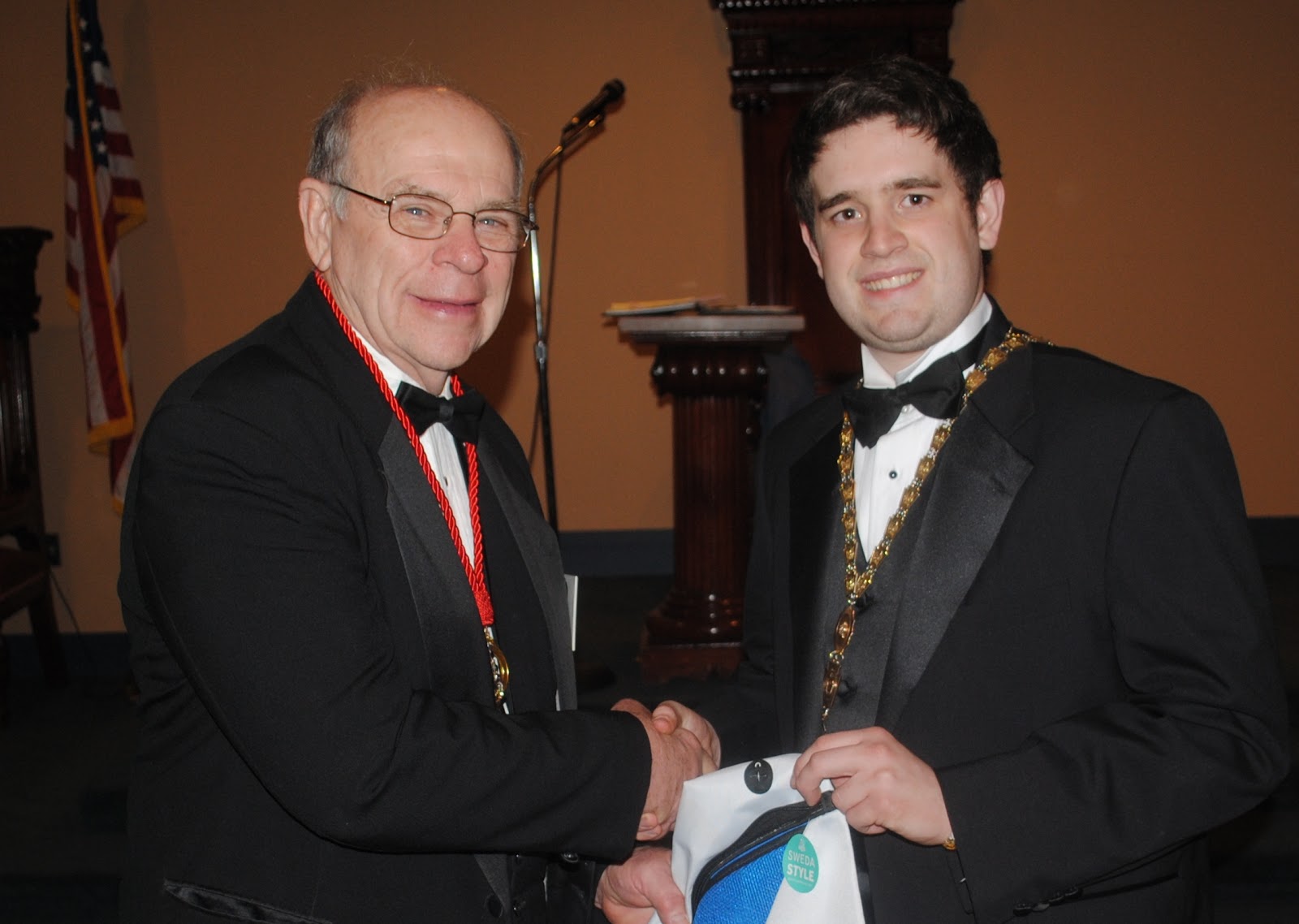
On Monday evening, I was to confer the First Degree in Freemasonry in my Lodge as the Worshipful Master. What does that mean to the average person? That I needed to perform about 45 minutes of memorized speaking for a brand new Brother joining the Fraternity. I would be his first exposure to Freemasonry and how I performed would stay with him for the rest of his life.

Prior to my performance, we had some other degree work to do. I participated in the work in another position, waiting my turn to take center stage. As we did this work, I found myself feeling increasingly un-well. Before Lodge, I had rushed home and then headed back out to visit "Dad" Dave Berry while he recovers from surgery. I failed to have dinner and I was paying the price in the form of some very bad stomach cramps. I had made a decision to skip dinner and it was my turn to face the consequence of that decision. I needed to take responsibility for my choices.

As I returned to my chair in between Degrees, I pondered what to do. I thought about asking one of the other members to do the Degree and excuse myself. I though about trying to get through half and then perhaps switch out. Then I remembered my blog post. What would switching out solve? It might relieve me in the short term, but what did it say about me as a Brother? As an officer? As a leader? It said that if I didn't feel up to the task, I'd just quit and make someone else do it. That's not me. I refuse to quit.

When it was my time to do the Degree, I manned up. I took my station. I powered through. I was in a pretty decent amount of pain, but I managed. It was uncomfortable to say the least. I know that I skipped some parts and missed a few words, but I made the performance sound sharp. I did the best job I could and tried to make the candidate feel welcome. As I finished the degree, I openly asked the Brothers for their forgiveness of my mistakes, stating that I wasn't feeling well. Several members came up to me and congratulated me on doing a fine job. They said that they didn't even notice I wasn't well and that knowing I was feeling bad made the degree all that much more impressive. I didn't offer my admission as an excuse for a less than adequate performance. Rather, it was meant as a heartfelt acknowledgement that I wasn't on my game and that they should expect more of out of me. Thankfully, that's exactly how my Brothers took it and they supported me (even as I quickly left for home.)

I'm proud that I got through that Degree in the condition I was in. But, I'm more proud that I had managed to live up to my own ideals and musings. I had taken personal responsibility for my actions. I didn't shirk my duties or discover a way out. I dealt with the discomfort as best as I could and performed under the circumstances. I was responsible to myself, to my Lodge, to my Brothers, and to the newest member I had just conferred the work on.

That was an adult decision.

Frat! ~ "Dad" Seth Anthony

Monday, October 27, 2014

What does it mean to be an adult?

When we are young, the only thing we want to be is older. We want to be 16 to drive. We want to be 18 (an adult by the law's standards.) We want to be 21 so we can drink alcohol. But, is that what really makes us an adult? The ability to drive a car or live to a certain age does not an adult make. Every person goes through a phase in their teens and twenties when they think they are an adult and making adult decisions. I know I did.

We all have those moments where it suddenly feels like you're an adult. Perhaps it was when you signed the loan paperwork to go to college or when you graduate and receive your degree. Maybe it was when you sent in your paperwork and registered for the Draft. Or, perhaps it was when you had ice cream and cookies for breakfast for the first and time no one yelled at you. Whether funny or not, these are the experiences that make us all feel like adults and they all have one thing in common - responsibility (yes, even the ice cream.)

Being an adult has nothing to do with having fun or being independent. Being an adult means one thing - taking on and understanding responsibility. When you sign loan paperwork, you're agreeing to repay thousands of dollars on a schedule in a timely manner. You're now responsible to the bank. When you filled out that draft card, you took on the duty of defending your country if need be and suddenly became responsible to Uncle Sam. That ice cream you had, well, you decided what to put into your body, and you'll be responsible for that later when health problems plague you.

Why am I thinking about this? In one week, I'm going to take on one of the biggest responsibilities of my life - signing my first mortgage and owning my first home. I'm now responsible to many, many, other people. I now have to think about how my actions affect my ability to pay the bank for the next 30 years. I need to keep my home maintained and become a responsible member of my neighborhood and community. That's what being an adult means - being responsible and dependable.

However, there is another aspect to this equation which may not be quickly apparent; the concept of personal responsibility. When you take on these duties of life, you also accept that you can and will be held accountable for the decisions you make. By owning a home, I know that I'm responsible for certain maintenance duties and taxes. When I became an officer in my Lodge, I knew that I had agreed to attend meetings, perform ritual, and help lead my Brothers. It no longer mattered if I felt like I needed to go to Lodge. My desire to attend ritual practice was no longer my choice. I had taken on the responsibility of doing so and it was now my responsibility to be there.

Of course, there is always a way out of responsibilities - quitting. You can quit making your loan payments at any time. You can quit taking care of your home at any time. You can quit eating ice cream at any time. But, what ramifications does that have? In the case of the ice cream,  probably pretty positive ones. In the case of the loan payments and the home, very negative. You can always quit anything - you just have to be willing to deal with the consequences of doing so. But, at the end of the day, what does quitting say about you? What does it say about your ability to be responsible and make good decisions? Does it show that you are an adult? That's what you have to contemplate.

Personal responsibility - you know you're truly an adult when you start acting with this idea in mind.

Frat! ~ "Dad" Seth Anthony
 

Monday, April 7, 2014

Why Watches?

A little while ago, I wrote a blog post about the origination of the term "key" as it relates to our awards in DeMolay. The long story short is that the keys were used for pocket watches. Since writing that post, I've taken a bit more interest in watches and clocks and thought I'd share some of my findings here.

Many DeMolays pride themselves on being above the "fashion" curve so to speak. Our members generally know how to dress better than most of their friends and they have more experience with wearing a suit and dealing with formal settings. However, one of the "dying" arts in men's fashion is understanding the need and wearing of a good wrist watch.

Now, many of you are probably saying "But, "Dad" Anthony, I don't need a watch. I have a magical device in my pocket that does everything a watch can and much more - my phone!" While it's true that your phone can do all of the things a watch does, there are some advantages to wearing a watch, plus there is statement to be made with your choice as well.

Why would you choose a watch over a phone? The folks over at Arcadia NYC, a business that sells watches, offer the following reasons:

"Think of just how many occasions where it is rude or just impossible to look at your smartphone but totally acceptable to casually or discreetly  glance at your wristwatch; The theater, a date, a concert, a meal with family or friends, an airplane, a business meeting, a job interview, while driving, and on and on and on. Add onto that the fact that watches are a beautiful, decorative accessory that is one of a very few that are totally socially acceptable for virtually all men and women if the design is appropriate – it gives a person a chance to express themselves in a way they may not be comfortable with using other forms of jewelry/adornment.

There are also professions that basically require that you have a watch – doctors, nurses, anyone who has to take someone’s pulse, needs a second hand to do it with. Therapists prefer to be able to discreetly keep track of that famous 50-minute hour without constantly looking obviously at the clock on the wall. Teachers can’t say to their students to keep their cellphones put away and then pull theirs out every 10 minutes to check their lesson plan scheduling. Drivers should know better than to be distracted with their cellphones while driving; but your wrist is almost attached to the steering wheel."

So, obviously there are still some very good reasons to wear a time piece on your wrist. Before you dismiss the idea of wearing a watch and go back to checking your phone, give the idea a chance. You might be surprised how wearing a watch makes a statement about you!

Perhaps later, I'll write an article about choosing a wrist watch... hmmmm....

Frat! ~ "Dad" Seth Anthony

Thursday, February 13, 2014

Who's excited about taxes?!?

It's the time of year that all adults dread - filing taxes. It's not something people enjoy doing, but it is a necessary part of our society. In that same vein, DeMolay Chapters need to file paperwork for taxes every year in the form of a 990.

Recently, DeMolay International put together a nice presentation on what filing a 990 means for a  DeMolay Chapter. I encourage all Advisors to check this out and make sure their Advisory Council officers are in the loop with it as well!


Frat! ~ "Dad" Seth Anthony

Thursday, January 16, 2014

The 7 Ethical Virtues

DeMolay teaches the Seven Cardinal virtues - Filial Love, Reverence for Sacred Things, Courtesy, Comradeship, Fidelity, Cleanness, and Patriotism. At their most base level, what are the Virtues? Quite simply, when stripped of all other meaning, they are basic guides on how to live an ethical life, which is something we all need and can use.

Recently, I was listening to one of my favorite podcasts, Freakonomics, which was referencing ethical behavior. They were interviewing two attorneys, one which currently works for the government and another who previously held the same position. These men were the legal counsel for the Department of Defense's ethics and compliance division. Part of their job is to train employees and military officers on ethical issues. They quickly realized that being entertaining is a great way to train and engage personnel, so they devised an ingenious way of handling the situation.

They began publishing a book called "The Encyclopedia of Ethical Failure" (which you can download by clicking that link.) In it, they detail hundreds of stories of government officials who have acted in an irresponsible and unethical fashion. These stories are then used as examples in trainings to help people better understand the fine line that can be ethics.

When asked what the common theme of these stories tends to be, one of the attorneys answered that most of the people who get caught up in an ethical scandal, and fail, are good people who just made a very poor judgment call. When someone confronts them after their failure, they often realize just how dumb the mistake was and completely understand why it was a problem.

As you live your life, I encourage you think back to the Seven Cardinal Virtues when confronted with a problem. Before you respond to a difficult situation, think about all the ramifications of your decision, letting the Virtues of DeMolay guide you. Just because something may be "legal" is it always ethical? That's often a murky line and one that separates men from greatness.

Frat! ~ "Dad" Seth Anthony

Thursday, July 11, 2013

The Value of One Member

This little poem is taken from the DeMolay International "How To" Book. It really makes you think, doesn't it?

Ten little members, standing in a line.
One disliked the Master Councilor, then there were nine.
Nine ambitious members offered to work late.
One forgot his promise, then there were eight.
Eight creative members had ideas good as heaven.
One lost enthusiasm, then there were seven.
Seven loyal members got into a fix.
They quarreled over projects, and then there were six.
Six members remained with spirit and drive.
One moved away, then there were five.
Five steadfast members wished there were more.
One became indifferent, then there were four.
Four cheerful members who never disagree-
'Til one complained of meetings; then there were three.
Three eager members!  What did they do?
One got discouraged, then there were two.
Two lonely members, our rhyme is nearly done.
One joined an athletic club, then there was one.
One faithful member was feeling rather blue-
Met with a neighbor, then there were two.
Two earnest members each enrolled one more-
Doubling their number, and then there were four.
Four determined members, just wouldn't wait
Til each one won another, and then there were eight.
Eight excited members signed up sixteen more,
In another six verses, there'll be a thousand twenty-four!

Frat! ~ "Dad" Seth Anthony

Thursday, June 6, 2013

Beating Burn Out

The DeMolay program is an amazing innovation that has been around for nearly 100 years. During that time, many members and Advisors have spent decades involved with their Chapters. Any time a person is engaged with an organization for that long, burn out will inevitably happen. It might be something minor, like not wanting to go another meeting; but, it could also be a much larger feeling - like the person feels like they are no longer making a difference. Either way, it can spell trouble for the program.

One of the most popular articles on our website is entitled "77 Tips Beating Burnout" and was put together by "Dad" Brent Richards. Perhaps you could use some of these tips to help with your everyday stress and beat that feeling!


  • 1. Deal with problems when they occur, if you can. Don't let them pile up.
  • 2. Go to bed to sleep, not to worry or brood. If you find you're in a bad mood at bedtime, take a walk, read a chapter of a book that you enjoy, talk to someone you love about the good things in your life, watch David Letterman or Jay Leno. 
  • 3. Find a tension outlet that works for you, and use it when you need to. Consider crossword puzzles, card games, running, dancing, playing in the town band. (But stay away from those outlets that work only at the moment, that only add up to bad news, like eating, drinking and drugs.) 
  • 4. Build fresh air and exercise into your daily life. Park a half mile from work or get off at a bus or train stop a half mile from work and walk the rest of the way. 
  • 5. If you don't own a dog to take for a walk, borrow one. Your neighbors will love you for it and it will do you more good than the dog. 
  • 6. Stay away from the coffee pot. 
  • 7. Turn on the radio to some zippy music when you're alone, and dance around to it. Don't look in the mirror - just let yourself feel good. 
  • 8. Study something far afield from your subject - take a course or just use the library. It doesn't have to be useful, although it can be, as long as you find it engrossing and fun. 
  • 9. Try not to get caught up in daily exchanges of complaints with colleagues. It doesn't do any good and makes everyone feel worse. 
  • 10. When you get home after a bad day, get into a hot shower and sing. It's almost impossible to feel rotten when your voice sounds so great. 
  • 11. Practice good nutrition by eating balanced meals and by avoiding too many sweets, too much junk food and foods that don't agree with you. 
  • 12. Volunteer to be a guide at your local museum or historical attraction.
  • 13. Take a good book into the library at lunch time. Choose a comfortable, isolated seat and enjoy the peace and quiet. 
  • 14. Clean out your attic, your basement or that overloaded closet. 
  • 15. Spend more time with your own children. Don't just chauffeur them around; learn about the activities and sports they enjoy by staying to watch that soccer practice or attending that band concert.
  • 16. Get in some big-muscle action: saw wood, dig up the garden, chop down trees, scrub the floor. 
  • 17. Breathe slowly, and pay attention to the air going in and out. 
  • 18. Take a hike; ride a bike. 
  • 19. Keep a diary faithfully, focusing on the positive aspects of your life and on your positive plans for the near future. 
  • 20. Walk in the rain or snow without worrying about getting your shoes wet or catching cold. 
  • 21. Never eat dinner while you're still stewing about work. 
  • 22. Schedule a time for airing grievances; stick to it. Don't talk about your grievances at other times. 
  • 23. Be especially good to your spouse. 
  • 24. Keep in touch with your friends. 
  • 25. Make a list of all the things you can't stand about your job. Put it away. A week later, write it again. Do this for four weeks and find out what the real problems are. Then try to find ways to overcome them. 
  • 26. Start a support group among your colleagues - not to gripe, but to share ways of coping. 
  • 27. Consider your alternatives. If you think you're trapped, look for a way or ways out, and figure out how to get out. Then figure out if you want to do it. If the answer is yes, do it. If the answer is no, look for ways to change your daily work environment. 
  • 28. After work on a cold day, enjoy a mug of hot cocoa (with marshmallows, of course) while taking a steaming hot shower. On a hot day, sip a glass of cold lemonade or juice while you sit in a tub of cool water. 
  • 29. Try to keep other people's problems separate from your own. 
  • 30. Go to a newsstand once a week and buy a different magazine each time. You will expand your horizons and find lots of new topics for conversation. 
  • 31. Learn more about your ethnic heritage. Join your nationality organization and become involved in traditional activities and festivities.
  • 32. Be careful not to schedule all your leisure hours. 
  • 33. If you see the need for change, figure out how to lead others toward that change. Work in the local chapter of your professional organization, get involved in politics or run for the school board. 
  • 34. Don't stew. 
  • 35. If you're popping aspirin, antacids or tranquilizers, cut down on the number you take, stop taking them, or get some professional counseling. 
  • 36. Think about what you can control in your work life and what you can't Let go of the things you can't affect. 
  • 37. Laugh. 
  • 38. Go see a sad movie and let yourself cry a lot. Then figure out why you cried a lot. 
  • 39. Try not to take a lot of work home with you. 
  • 40. Smile and speak to everyone you see on the street. See how they smile back! 
  • 41. Go to a bookstore and buy a novel you've always wanted to read. Take your time reading it and enjoy every page. 
  • 42. Take up that hobby you've been thinking about for years. Set up that aquarium; teach yourself to develop film; research your family tree; learn to weave or refinish a piece of furniture. Start off small, though, so you don't get discouraged too quickly. 
  • 43. Join a community pool and go to it often. Set a reasonable goal of the number of laps you'll swim each time and do them all. Increase your goal by a few laps each time you go. 
  • 44. Look for things to praise in yourself and others. 
  • 45. Find people you can like and care about. Keep in contact. 
  • 46. Develop the skill you had as a kid -- selective inattention -- and use it to keep from drowning in a sea of petty irritations. 
  • 47. Bring a picnic lunch to work to share with others. Take it outside to a secluded grassy area to eat. Try not to talk about work-related matters. Take turns preparing the lunch whenever convenient. 
  • 48. Go out to dinner at one of your favorite restaurants with a friend, a relative or your spouse every Friday night for a month. 
  • 49. Clean out your desk or the cabinets in your office if they need it. If they're already spotless, let them get messy for a week or two. 
  • 50. Get up 15 or 20 minutes earlier than usual in the morning to read the newspaper, jog, take a short walk or give your garden a little special attention. 
  • 51. Be honest with yourself about your work. If it's rotten because you feel rotten, set some goals and get going on them: daily ones, weekly ones, then longer periods. 
  • 52. Take up a new sport. Learn how to play tennis, take scuba diving lessons, join a community softball team or start ice-skating. 
  • 53. Schedule time to be alone. 
  • 54. Schedule time to be with people you care about.
  • 55. Create a new bulletin board display just for fun. Make it big, bold, and colorful. 
  • 56. Take a weekend excursion to the mountains, the beach or your favorite hideout. Make sure the place you choose is relatively free from everyday hassles. Leave after school on Friday, and come back on Sunday afternoon in time to relax before Monday. 
  • 57. Choose a quiet, calm environment with as few distractions as possible in which to relax. Close your eyes and concentrate on relaxing all your muscles, beginning with your toes. Doing this for 10 to 20 minutes a day can do wonders for a tired, overworked mind and body. 
  • 58. If you live in an urban or suburban area, plan a day trip into the country. Bring a picnic lunch and go fishing, explore a historical town that's off the beaten path or browse through a flea market. 
  • 59. Don't fret silently if you don't get a particular task completed by the time you planned for it to be done. 
  • 60. Reward yourself for all the good work you've been doing. Buy a record or a new outfit; go to the theater or a baseball game. 
  • 61. Take an exercise or dance class in the evening. Really put an effort into stretching and movement. If the weather's bad or you feel too worn out to even make it to the class, force yourself to go anyway. You'll be glad you did. 
  • 62. Write a letter or send a card to a faraway friend who you haven't heard from in awhile. 
  • 64. If you have a disagreement with someone you work with, look at the situation from both sides. Remember that the other person may be having a bad day. Try to work out the problem instead of letting it bug you. 
  • 65. If you live in a rural area, go to the city for a day to shop, visit museums and galleries or take in a show. 
  • 66. Go to your local library and leisurely explore alternative careers you've been mulling 
  • over or that you once considered. Find out about the salaries, opportunities for advancement, and working conditions. Talk to people in those fields. 
  • 67. Get a new hairstyle; shave your mustache or grow a beard. 
  • 68. If you feel you can't face the same job every morning, try to do something else. 
  • 69. If you feel that no one cares about anything you have to say, try to find out what they really do care about. Meet them where they are. 
  • 70. Get out and look up some Senior DeMolays. Find out what they're doing. 
  • 71. Take a day to straighten out your personal filing system. Then schedule the same time every day to keep up with paperwork. Don't let it become Mt. Everest. 
  • 72. Avoid going home and sitting in front of the TV or lying on the couch. 
  • 73. Get up early enough to prepare a healthy breakfast every day before work. 
  • 74. Experiment with some gourmet recipes - try making a soufflé, egg rolls or baklava. If the dish turns out a flop, just laugh and try it again some other time. 
  • 75. Volunteer some of your time to be with someone who needs you. You'll feel good about making others feel good. 
  • 76. Take three long breaths, hold, and let them out slowly before you begin work. 
  • 77. Invite some of your friends to your home for dinner or a barbecue sometime. Talk to them - find out about their hobbies and interests, their dreams and goals. Tell them about yours, too.
Frat! ~ "Dad" Seth Anthony

Monday, March 11, 2013

The Conscious Lifestyle: How a Leader Should View Power


Today's post comes from a find I came across while updating my professional resume' and portfolio. We are all leaders in DeMolay. We lead our Chapters, our state and even groups of friends.

I'll let you wonder over to the link, but I'd like to draw your attention to one specific quote from the article.

"... as a successful leader, you are empowering others at the same time as you empower yourself."

Check out the blog, and assess your leadership style. Do you want to empower yourself to do better? Food for thought. 

http://www.linkedin.com/today/post/article/20130308201104-75054000-the-conscious-lifestyle-how-a-leader-should-view-power?_mSplash=1&rs=false

"Dad" Matt Blaisdell


Monday, March 4, 2013

The Value of Membership - Round 2

Last Thursday, I wrote a blog post about the value of membership. I specifically took the perspective of a young man and how he would sell DeMolay to his friends, using a discussion of the actual benefits a person would gain out of joining DeMolay. However, there is another kind of "member" that we need to think about recruiting; members of our Advisory Councils are just as hard, if not harder, to come by than active DeMolays.

What tangible benefits are there to being an Advisor for a DeMolay Chapter? One of the most commonly cited would be involvement of a parent with their own child in the program. However, not every Advisor is working with a young man who is related to them. So, I'd rather take a look at this from the angle that the person we are trying to recruit has no relation to the Chapter through its membership. I also know that many DeMolays come back and give something to the program as adults. For them, the value is built in because they want to help a program that gave them something. Therefore, I won't be taking that view either. Rather, my question is,  how do we recruit a person into the role of an Advisor without those two connections.

Now, you may be thinking, if I'm not targeting parents and Senior DeMolays for this sales pitch, I'm missing a huge market. You're right, I am ignoring that part of the market, simply because the have different benefits from involvement that others will not have. On the other hand, the list I'm going to propose below will apply to everyone, including parents, Senior DeMolays, and everyone else. I'm trying to offer a generic list that you can build on in your Chapter.

With all that being said, what tangible benefits would an adult receive by signing on to be an Advisor?

  • Subsidized costs from the Chapter for refreshments and travel (only with some Chapters though.)
  • A chance to network with other leaders in the community.
  • The opportunity to meet Master Masons from other Lodges (if they are involved in the Fraternity.)
  • Recognition for service via awards and honors.
  • The chance be a mentor and to help a young man learn and grow as a person.
You'll see that the list is much smaller than the one for active DeMolays. But, it's the final bullet point that really matters and that is oftentimes the hardest to explain. I don't know of one DeMolay Advisor who wouldn't cite that last bullet point as a huge selling point for their involvement with our organization. The ability to have an impact on a young man is really what keeps many of our Advisors coming back. Helping young men grow into leaders and members of society with integrity and character is a benefit beyond compare. Unfortunately, that's a tough thing to articulate into words, but I firmly believe it's the key to any Advisor recruitment program. If you can explain the value they will derive out of being a positive influence on a member, you'll find it's much easier to get them to join your Advisory Council.

So - how do you explain the value of being a DeMolay Advisor? Leave your answers in the comments section!

Frat! ~ "Dad" Seth Anthony

Monday, February 25, 2013

It's okay to fail!

Back when PA DeMolay started this blog, we introduced the concept of "Unplugging." The general idea of that concept can still be found in the original post, so I'm not going to go into here. However, a key part of the concept was the idea that it is okay for DeMolays to fail. Studies are beginning to find that the lack of learning from the experience of failure is leading to crucial challenges for today's youth. Thankfully, DeMolay provides a safe place for kids to fail and learn from their experiences. This isn't something that can simply be bought or taught, rather it has to occur and the learning must take place naturally. This kind of experience is one of the best kept secrets of DeMolay.

So, with this in mind, I share with you a recent article I read, entitled "Why Parents Need to Let Their Kids Fail." I ask that you to click the link and really dive into the material. The stories that one teacher recounts just goes to show how big of a problem this can be. I encourage all Advisors to thoroughly read that article and consider their roles in the Chapter and its operation.

Frat! ~ "Dad" Seth Anthony


Thursday, October 18, 2012

Zeruba - who?

As part of my "day job," it falls to me to compile and edit the Masonic Youth Minutes, which is a newsletter that is published bi-monthly by the PA Masonic Youth Foundation. It normally contains an article on each of the Masonic Youth Groups, as well as program updates about what PMYF is doing.

However, for the last year or so, I've reserved the cover article for myself. Each issue, I use this space to write a "philosophical" piece. By this, I mean an article that relates to working with Masonic Youth in general. Often times, this space discusses why working with Masonic Youth is valuable, or what Masons themselves get out of such involvement.

One of the most popular pieces I've written in that column was entitled Wanted: Modern Day Zerubbabel. I'm re-publishing it here, as I think it had some valuable points and deserves wider distribution. Enjoy!


Wanted: Modern Day Zerubbabel

Masonry teaches that King Solomon, along with the other two Grand Masters, completed the Temple at Jerusalem, thereby cementing their place in Judeo-Christian and Masonic history. We, as Free and Accepted Masons, venerate the story and legacy left to us by Solomon and his workers. However, as many Masons know, there is another character of singular importance - that of Zerubbabel. It was Zerubbabel who, according to Biblical interpretation, led the rebuilding of the Temple, keeping the dream of Solomon alive. He is often regarded as a builder and visionary, having taken up the banner that Solomon left behind.

Masonry has its Solomons - those people who have built Masonic organizations from the ground up; men like Walter Fleming and William Florence, who started what would become Shriners International, or J. Raymond Shute, who brought several Masonic organizations to America from England. The average Mason, however, is rarely in a position to build a brand new organization. It takes rare individuals to have the drive for building, as was displayed by King Solomon.

That is when we look to Zerubbabel, the rebuilder. Many communities around our Commonwealth have previously had Masonic Youth Groups. Evidence of their presence remains buried in closets, with costumes, regalia, and supplies. This is not all that dissimilar from the way Zerubbabel found the remains of the Temple. He saw a worn down edifice that he knew deserved far better. Now, YOU can be a modern Zerubbabel. All you need to do is look to the Masonic Youth Groups for a legacy that can be built for generations to come.

Have you considered working to reopen a Masonic Youth Group in your area? The Temple of our Youth is ready for another generation; it just needs a Zerubbabel to lead the way.

Frat! ~ Seth C. Anthony

Monday, October 15, 2012

The Role of Sponsoring Bodies

DeMolay, as an organization, can't survive without the patronage of a sponsoring body. In the case of our youth group, those patrons are Masonic bodies that provided support and financial assistance. But, what is really expected of a sponsoring body for a DeMolay Chapter?

1.         Provide a proper place for the Chapter members to meet.  DeMolay Chapters should meet in a Lodge Room.  If it is not always available, a social room may suffice for informal meetings, but a Lodge Room is almost essential for all ritualistic presentations such as Degrees and the semi-annual Installation of Officers.  If rent must be charged, it should be reasonable, and within the funding capabilities of young people.  If rent is being contemplated, ask this question: “How much rent does a church charge its youth group?  Is Freemasonry’s relationship to DeMolay any different?”  The DeMolays should be able to earn their keep through Masonic service, rather than the payment of rent.


2.         Maintain an active Advisory Council of 6 or more trained adult leaders, one of whom must be a Master Mason to serve as Chairman of the Advisory Council.  Others may be Senior DeMolays, parents, or other adults (age 21) selected to serve. The Presiding Officer of the Sponsoring Body is asked to review the nomination of adults to serve on the Advisory Council.  He signs an adult worker profile recommending the appointment of any adult leader to service.The best Advisory Councils consist of 10 or more members, each with their own job, and none with an overload responsibility.  The Chapter Advisor is the key position, and may be expected to do more than other Advisors.


3.         Supervise the Chapter, through the Advisory Council.  The Sponsoring Body should have some input into the program, activities, membership and funding of the Chapter.  It is important however, to observe protocol by working through its representatives appointed to the Advisory Council.  A Chapter is much more likely to enjoy success when its Sponsoring Body demonstrates interest in the programs the young men have developed.


4.         Promote Membership in DeMolay.  Spread the word about the great program of DeMolay, among the children, grand-children, relatives and neighbors of the members of the Sponsoring Body.


5.         Visit DeMolay meetings or public functions.  It is important that the Sponsoring body be officially represented by an officer at the public Installation of Officers held twice each year.  Occasional visitations to a regular meeting or an activity by members or officers will show the young men that the Sponsoring Body is committed to the Chapter.

6.         Financial assistance is helpful, but not necessary.  DeMolays are expected to raise their own funds for activities, charity, and Masonic service.  However, Masonic sponsorship or scholarships, special activities, tuition for the Key Man Conference, and sponsors of delegates to the Annual Conclave are just some of the ways that sponsoring bodies have provided help, if within their means. The Grand Lodge has authorized the use of Lodge Funds to support the Order of DeMolay.  In addition, DeMolay Chapters hold an IRS 501(c)(3) classification and may accept tax-deductible contributions. 


7.         Provide a good moral and fraternal example to the DeMolays.  The purpose of DeMolay is to take good boys and make them into good young men.  We are, in essence, imparting Masonic principles to our youth.


Does your sponsoring body do this for your Chapter? Are you a member of a Masonic group that could manage this kind of support for a Chapter? Then shoot us an email at webmaster@pademolay.org!


Frat! ~ "Dad" Seth C. Anthony

Thursday, October 11, 2012

What have you put out there?

As part of our Youth Protection program, we address the issue of internet safety. In many cases this means identifying bad online situations and getting out of them. However, there is another important part to this topic - that of identify theft and personal history. This video speaks for itself and might make you think twice about your online presence.


Just something to think about... for DeMolays and adults alike!

Frat! ~ "Dad" Seth Anthony

Monday, October 8, 2012

Vocabulary 101

With the school year back in full swing, many DeMolays are facing the challenge of papers and tests. Some of the older members are probably staring at college applications and anticipating their future. This can be a stressful time, especially when you're under pressure to get things done by a deadline. With so many pieces to be written, it can be very tedious to draft paper after paper, essay after essay, especially if English isn't you're specialty.


One area that most men struggle with is vocabulary. Having a large vocabulary can make writing papers easier, as well as give an edge in tests and collegiate applications. Thankfully, the folks over at Art of Manliness recognize this and have put together a great article entitled "The Importance of Building Your Vocabulary (And 5 Easy Steps to Doing It)" It's worth a look by everyone - both DeMolays and Adults. 

All DeMolays have an edge in vocabulary thanks to our Ritual, but it can never hurt to expand your horizons.  Someday you'll realize just how important it is to have a wide array of words at your disposal. Just ask the Elected State Officers around the time of the Keystone Crusader deadline!

Frat! ~ 
"Dad" Seth Anthony

Thursday, September 20, 2012

A Preview: Round 2

On Monday, I gave you a preview of one of the organization charts we are using in the new online version of the DAD Training. The chart you saw was for the young men, but we all know that the adult volunteers of DeMolay are organized a bit differently. We just put the finishing touches on the Adult Leader Organization Chart and I'm happy to share it with you today! Please note, this chart was developed with Pennsylvania DeMolay in mind, but much of it applies to the organization as a whole.


  • DeMolay International (Active and Deputy Members) – DeMolay International is the highest authority on the DeMolay program. It is composed of Active Members (who wear gold collars) and a varied number of Deputy Members (who wear silver collars.) Active members may speak and vote on issues, while Deputy members may only speak.
    • Board of Directors of DeMolay International – This body rules when DeMolay International is not in session. It is composed of the officers of DeMolay International (Grand Master, Grand Secretary, Regional Representatives, etc.), two active DeMolays (the International Master Councilor and the International Congress Secretary) and several key committee chairmen.
  • Executive Officer of Pennsylvania DeMolay – The Executive Officer of a jurisdiction is the highest DeMolay authority in his assigned area. He is appointed by the Grand Master of DeMolay International with input from the Masonic organization in his territory. He is responsible for managing and organizing DeMolay in his jurisdiction.
    • Executive Secretary of Pennsylvania DeMolay – Appointed by the Executive Officer, the Executive Secretary serves as his right hand man. In Pennsylvania DeMolay, the Executive Secretary handles the day to day and clerical operations of the organization, such as membership and program reporting, Advisory Council registrations, and jurisdictional communications.
    • Executive Officer’s Leadership Team – Each Executive Officer is allowed to appoint jurisdictional staff members to help administer the DeMolay program in his area. In Pennsylvania DeMolay, there are Deputy Executive Officers who aid with administrative oversight of Chapters as assigned. Additionally, there are program directors who handle specific duties within PA DeMolay (such as Ritual, the State Officer Corps, and Convention.)
  • The Advisory Council of a Local Chapter – Local DeMolay Chapters have an Advisory Council which is appointed by the Executive Officer. They serve entirely at his discretion and he may appoint and remove members at any time, with or without reason. These adult leaders ensure that each DeMolay Chapter meets organizational requirements and provides quality programming for the young men.
    • Chapter Chairman of the Advisory Council – The adult leadership of the Council is overseen by the Chapter Chairman, whose job it is to make sure that the Chapter has enough Advisors and to oversee the adults working with the Chapter.
    • Chapter Advisor – Each Advisory Council chooses a Chapter Advisor, whose job is to work with the young men, most especially the Councilors, on planning Chapter activities. This person serves as the conduit between the young men and the Advisory Council.
    • Members of the Advisory Council – Every member of an Advisory Council is important and will fill varied roles, such as Ritual Advisor, Merit Bar Advisor, etc. They will also help in making sure that every DeMolay event meets the Youth Protection Guidelines by being available to supervise activities.
    • Councilors – The Councilors (Master, Senior, Junior) are elected by the young men and act as their leaders. They work with the Chapter Advisor to plan events and organize the Chapter.
    • Members of the Chapter – These are the young men; the DeMolays themselves.
I hope this chart clears up some questions for you!

Frat! ~ "Dad" Seth Anthony

Tuesday, August 21, 2012

The 8th Precept - Manliness?

When I write these blog posts, I often try to not use the same source for material too often. However, once in a while I run across something of great value that forces me to be a little bit flexible with that. In many cases, that source is the Art of Manliness. The amount of material that is pertinent to our young men (and our adults) is really impressive and often times very apt.

Recently, they posted an article entitled "Essential Etiquette for Young Men." This is really a composite article - it have some fresh material, but it offers links to a vast amount of other articles they've posted on several related subjects. These include how to write an email effectively, how to make an apology,  effective listening, and even dating advice. These are all really great pieces.

But, I'm also a realist. I know many of you aren't going to take the time to read those articles. What I'd really like to see is a Chapter Advisor picking an article for every meeting (there are at least 6 months worth of articles available at that rate) and distill the ideas to present to the young men. Better yet - have a young man distill the ideas himself and give the presentation! Wouldn't it be great to have a "Manliness" expert in your Chapter? That would be a great mentoring opportunity for sure. It's just a thought...

On another Art of Manliness related note - if you're looking for a gift for that newly graduated / alumni member of your Chapter, check out the Art of Manliness Collection. Available on Amazon.com for less than $20, it includes two great books - The Art of Manliness and Manovationals. These two would provide great guidance for those about to set off for College or about to enter the real world.

Get out there and be manly!

Frat ~ "Dad" Seth Anthony

Monday, July 30, 2012

Convention 2012 Survey Results

Being the Director of Convention is a great job. I really enjoy planning one of the most anticipated events on the PA DeMolay calendar. I wouldn’t do the job if I didn’t get some satisfaction out of it. However, there are many times that being Director isn't fun at all. One of those times is when we ask for the yearly survey after Convention. It can be tough to take honest criticism, but I sincerely believe that it makes for a better Convention program. So, as I have done in the past, I am endeavoring to be as open and honest about the Convention program as I can be. I felt like this year’s Convention went pretty well. It appears that many of you felt it was okay, but there were some problems that I wasn’t aware of. Let’s review!


In total, we received 30 responses to our survey. Of those, five were from active DeMolays and 25 were from adults. This equates to just under one fifth of the attendees. This is an acceptable sample size for surveys, so I feel okay drawing some conclusions about the program (although the results are skewed to the adult perspective.) As with last year, I asked the attendees to rate the different parts of the event on a scale of 1 to 5, with 1 being “terrible” and 5 being “outstanding.” In my eyes, a score of a 3 is average and acceptable. I would like to be above a 3, but I am willing to accept a 3 as decent score. Let’s start by looking at the graph.


You can click this graph to make it bigger.

So, what do I see when I look at this graph? Looking at the first number, I immediately think we had a slightly better than average Convention. This bar corresponds to the question “How would you rate your overall Convention experience?” The average was just under  3.79 out of 5. For comparison, last year we received a 3.75. That tells me that overall we did a decent job. There is still room for improvement, but people were mostly happy. The other score that I will draw your attention to is the last one on the chart, labeled “Composite.” The Composite score takes the scores given in all of the other categories and averages them for each person. In this case, the Composite score was just 3.70. I put more faith in the Composite score than I do in the Overall score. Why? People are generally more forgiving of the event as a whole. It’s easier to rate individual things poorly than the entire event. This helps provide insight as to how honest people were about their scores (meaning did they pad the first score a little bit so it didn’t seem like they hated the event, or did they rate the whole event low based on only one bad experience?) This year, the scores are almost equal, telling me that people were quite honest. The "Composite" average also gives me a baseline to work from when deciding if a particular event was scored above or below average.

The first score was for paintball at Ski-Rountop. This event averaged a 4.14 out of 5, which is much higher than we've received on similar events in the past. I only received one "complaint" about paintball, so I'm fairly happy with the event. After last year, we contemplated removing paintball from the Convention program, but this proves to me that it does remain a viable option.
Next up we have the Harley Factory tour. It received a 3 out of 5, which was generous on the behalf of the respondents. Their were some communications issues at the factory, resulting in some people having their tour delayed, or not being able to go at all. This was compounded with the rudeness of the staff at the factory. Thankfully, we worked out method to get everyone through, but I understand the reason for this score being low.

Speedway 94 turned out much better than I expected. With the rain in the area, I was quite worried that we wouldn't be able to do much. Their staff came through and got all but one track opened up, which was great. Also, I can honestly say that NASCAR driver Tony Stewart saved this event. His presence distracted people while the tracks were readied, making the down time easier to manage. With an average of 3.91, I feel comfortable looking for similar venues in the future - meaning places with go-karts and games, all in one.

The hotel party was a real gamble for us. With the increase in cost of amusement parks, we had to find another way to work some fun into the program. We've never "brought the party to the hotel," but I was quite pleased with the result. The inflatable attractions worked great, providing entertainment to both the young men and the adults. The game trucks were a smash hit! I've gotten several good comments on them. With a score of 4.04 out of 5, I would entertain doing this kind of event again if we are having trouble securing affordable entertainment.
Now we come to the low scores. I am very frustrated with the score the hotel received. It seems that no matter how many times I ask attendees to let me know of issues, I always hear about the problems after the event. This ties our hands in negotiating a discount, or trying to fix the problem. The score, a 3.32 out of 5, is deceiving. A large number of respondents complained that they found their rooms dirty or with mildew present. Several asked that we never return to this property again. With a response like that, I'm afraid that the Holiday Inn in York has been removed from our potential properties list for our next Central swing. We won't entertain returning for at least 6 years.

The food was our lowest score of all, coming in at a 2.96 out of 3. After reviewing the issues mentioned, I realized that the lowered score revolved around two problems - breakfast on Saturday and lunch on Saturday. It's often said that a Convention lives and dies on the food, so this is a major blow for me. The pancakes were not well received, with many people citing quality as an issue. The lunch was a different problem, with some folks not liking the lemon caper chicken. Banquet food is a major frustration, as you have to try to find something that both adults and kids want. We've tried going really plain, which causes the adults to complain that the food is bland. Every time we go the other direction, and add flavor, we get complaints that it's not kid friendly. We are in the process of selecting the food for 2013, so I'll keep this in mind. Another concern were those with special dietary needs. We will have an area on the registration form for 2013 to make a note of these. This DOES NOT mean that you can ask for a different meal just because you "don't like" what is being served. We will only honor changes that are vegetarian / vegan or medically necessary.

With a 4.29 out of 5, the workshop as presented by Bro. Chad Reichard worked out very well. Chad did a great job and this is one the highest workshop scores we've ever received. Hopefully we can continue to provide a workshop that both educates and entertains. Next year we are thinking of getting some players from the local AA baseball team to speak.

The ritual workshop was also well received, coming in just shy of 4.2 out of 5. "Dad" Brian Shaffer can take all the credit here, as he and his team put together a program that was both informative and entertaining. With ritual taking on a bigger focus here in Pennsylvania, I'm sure you'll see more of these types of workshops.

Last, but not least, we come to the luncheon and business meeting. This score rates how well these events were run and how smoothly everything flowed. Scoring a 3.79 perplexed me a bit. We've generally gotten very high marks on the speed with which we do the business of the organization. However, after a bit of thought, I realized the reason for the low scores - it was all the extras! This year we had a lot more special presentations, including collars, medals, and speakers. This made the session run a bit longer than usual. In general, it was still a good score, so I'm not going to fret too much.

The only other issue that came up in the comments was cost. Apparently there was some concern over the cost compared to the value. While I can't go into the detailed accounting of the event, I can tell you we broke just about even. PA DeMolay doesn't make any money off of Convention. Furthermore, a couple respondents asked about getting discounts on the cost through Grand Lodge or other means. The DeMopoly program will help with this by granting Chapters credit for completing Monopolies on their game board. Also, there are some other programs that haven't been announced yet, so stay tuned.


Whew - that was a lot! Where do we go from here? Well, next year is Erie, with the headquarters hotel being the Bayfront Sheraton. This is a fabulous facility that I think everyone will enjoy. As I have announced, this will be my last Convention as Director. Beginning in 2014, "Dad" David Labagh will take over as Director of Convention. He is looking at sites in Reading and Allentown for that year, as well as Gettysburg for 2015. As we lock in sites, we'll keep you updated.

Until next year...

Frat! ~ "Dad" Seth Anthony


Thursday, March 22, 2012

Little Ideas

When one looks back at the history of DeMolay, almost everything that we now hold dear started as a little idea. The order of DeMolay started as a club of 9 guys. That's a pretty little Chapter by today's standards. Frank Marshall wrote the ritual, by hand, in his front yard. That's a pretty insignificant place to create such an enduring piece of performance art. The first Chevaliers and Legions of Honor were created and given by "Dad" Land - not to create some long lasting piece of history, but to recognize those who helped to build DeMolay. Everything we do started as a simple idea that has been built up over time.

All of history is the same way. Take a look at this video from one of my favorite people - Adam Savage from the hit TV show Mythbusters.


As you think about your chapter and what you do in DeMolay, remember that you don't have to think big to make a difference.Some of the most important parts of our program started as little ideas that grew over time.

Frat! ~ "Dad" Seth Anthony

Thursday, February 23, 2012

The Chair recognizes... you!

Recognition is a sticky issue in the world of Fraternal politics. It's the one "carrot" that a group can use to keep people involved and interested. It's certainly and important aspect of any organizations program, for if you don't show public appreciation to your volunteers, eventually they will go away. DeMolay is much the same way - although it is often quite a sticky topic to discuss.

On one hand, we offer dozens of awards and merit bars to our members; on the other, we try to impress upon our members not to be a braggart about their achievements and to be modest in their dress (at least here in PA.) We tell our members to wear a single lapel pin, a single neck award or honor (such as the RD or Chevalier) and a single pocket jewel (such as a PMC jewel or merit bars.) This keeps our young men from looking like Swiss Admirals, but doesn't it defeat the purpose of recognition? Perhaps not, but it's something we have to think about.

Recently, I read an article by Mr. Tim Bryce over at the website Freemason Information. In it, Mr. Bryce discusses the need for recognition amongst most people. It relates well to DeMolay, so I thought I would share it here. Enjoy!

"For the last several years our Masonic lodge has been hosting an annual dinner to honor the county’s “Deputy of the Year.” Senior officers at the sheriff’s office select a person they believe deserves the honor and informs the Lodge as to why the individual merits the award. The Lodge then prepares a respectable plaque, schedules a dinner and invites the officer’s family, colleagues, and of course Lodge members. A lot of nice words are spoken on the deputy’s behalf, several photos are taken, and a small honorarium is presented to the officer who typically donates it to a local charity. The Lodge prepares a press release regarding the award and distributes it accordingly to the local press. It doesn’t really require a lot of work and it is the Lodge’s small way of expressing its gratitude not only for the job the deputy has performed, but for the sheriff’s office overall. It’s our way of saying “thank you” for their service. It is certainly not a lavish affair, but it is still greatly appreciated by the department for the recognition they receive. The honoree is flattered by the attention bestowed on him by the Lodge and his superiors, the family looks on proudly, and the public is informed of the good work performed by the sheriff’s office.
As human beings, we all crave some degree of recognition, some more than others. Entertainers gorge on it in a frenzy of media events, but most professions do not have such awards. Some people, who have confidence in their abilities, do not need such recognition and even avoid it, but many of us do, particularly in business where a kind word is rarely offered by anyone, including the boss. We may be quick to criticize, but we tend to be rather lethargic when it comes to issuing a compliment.
No, not everything requires a major media event to express gratitude, sometimes the best recognition is nothing more than a few kind words and a sincere handshake. A gift card, tickets, or some other small token of appreciation may be nice, but I tend to believe taking the person out for dinner or a drink, where you can personally thank the worker, is a nicer touch. To be even more personal, you might want to invite the person to your house for dinner. Such familiarity forms a bond between people and is a convenient way for building trust among workers. In this day and age of political correctness, such familiarity is often avoided as people worry they may offend the other party by saying something out of context and misinterpreted. Consequently, personal dinner parties, which used to be the norm in yesteryear, tend to be avoided in the business world these days. “Show me the cash,” tends to be the preferred alternative in today’s world which I consider somewhat unfortunate.
Regardless of the size of the award, be it a large prize or just a compliment, try to present it with a sense of finesse so the recipient understands it is a genuine and sincere token of appreciation on your part. Sometimes levity is useful for making a presentation, but there should generally be an air of professional courtesy when doling out such awards. If presented too lightly, the recipient may not take it seriously and even be insulted by the gesture.
We have cultivated a positive relationship with the sheriff’s office by presenting the “Deputy of the Year” award for several years now. The recipients appear to be genuinely touched by the sentiment, not to mention the families and co-workers. The award may not seem like much, but when it is presented by the master of our Lodge with a standing ovation from those in attendance, the deputy appreciates our thanks. It’s the little things in life that make it worth living. Saying “thank you” is one of them."
What can your Chapter do to help honor those who deserve a pat on the back - and to keep your dedicated volunteers around?
Frat! ~ "Dad" Seth Anthony