Showing posts with label Responsibility. Show all posts

Thursday, October 30, 2014

Personal Responsbility in Action

On Monday, I wrote a lengthy post about being an adult and how that relates to personal responsibility. It's been quite popular and has had several reads and shares. I know that I take a narrow view of responsibility and adulthood, but I was reminded why this is the case on Monday evening. When I wrote that piece, little did I know that I would have to put my "money where my mouth is" so to speak.

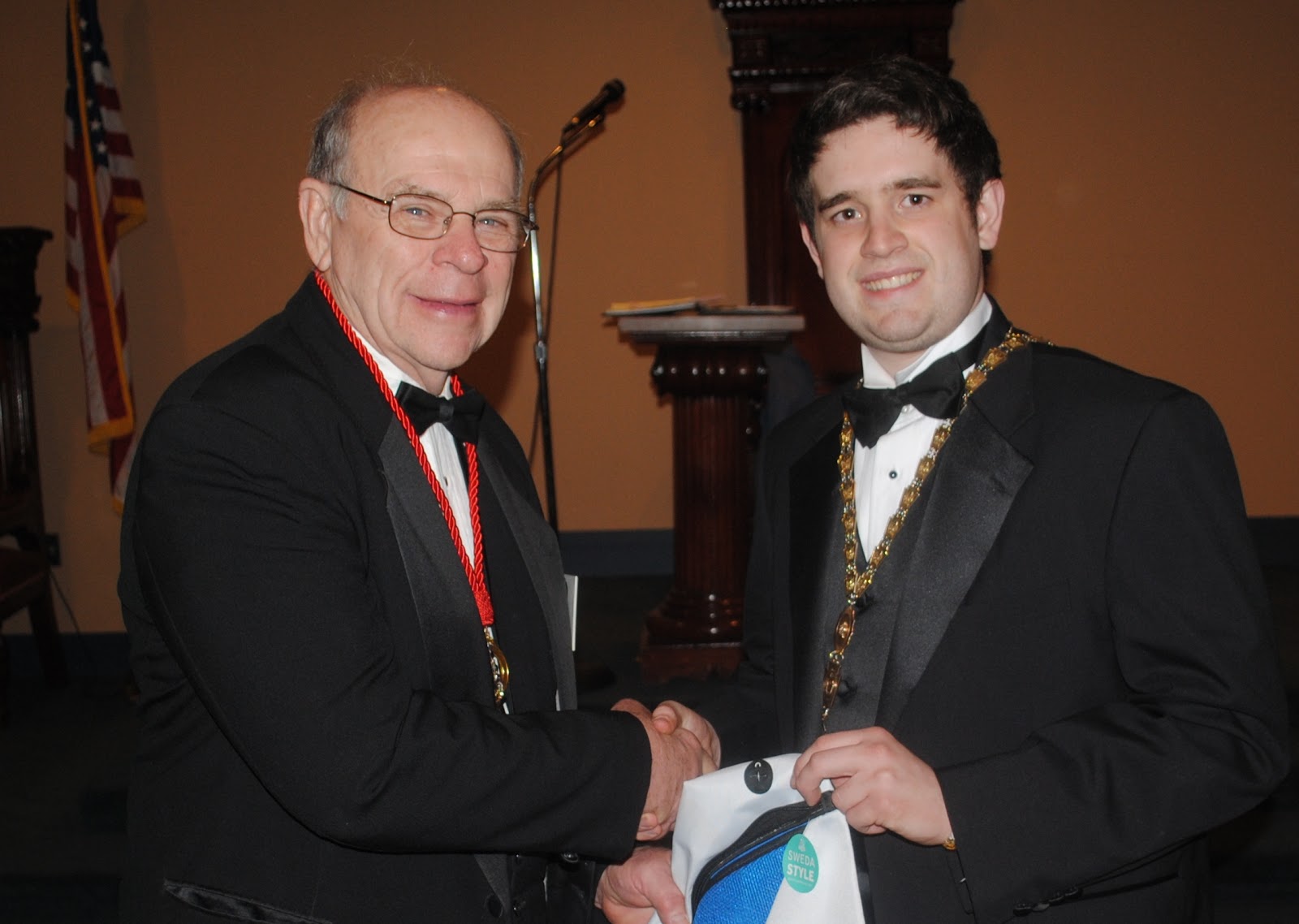
On Monday evening, I was to confer the First Degree in Freemasonry in my Lodge as the Worshipful Master. What does that mean to the average person? That I needed to perform about 45 minutes of memorized speaking for a brand new Brother joining the Fraternity. I would be his first exposure to Freemasonry and how I performed would stay with him for the rest of his life.

Prior to my performance, we had some other degree work to do. I participated in the work in another position, waiting my turn to take center stage. As we did this work, I found myself feeling increasingly un-well. Before Lodge, I had rushed home and then headed back out to visit "Dad" Dave Berry while he recovers from surgery. I failed to have dinner and I was paying the price in the form of some very bad stomach cramps. I had made a decision to skip dinner and it was my turn to face the consequence of that decision. I needed to take responsibility for my choices.

As I returned to my chair in between Degrees, I pondered what to do. I thought about asking one of the other members to do the Degree and excuse myself. I though about trying to get through half and then perhaps switch out. Then I remembered my blog post. What would switching out solve? It might relieve me in the short term, but what did it say about me as a Brother? As an officer? As a leader? It said that if I didn't feel up to the task, I'd just quit and make someone else do it. That's not me. I refuse to quit.

When it was my time to do the Degree, I manned up. I took my station. I powered through. I was in a pretty decent amount of pain, but I managed. It was uncomfortable to say the least. I know that I skipped some parts and missed a few words, but I made the performance sound sharp. I did the best job I could and tried to make the candidate feel welcome. As I finished the degree, I openly asked the Brothers for their forgiveness of my mistakes, stating that I wasn't feeling well. Several members came up to me and congratulated me on doing a fine job. They said that they didn't even notice I wasn't well and that knowing I was feeling bad made the degree all that much more impressive. I didn't offer my admission as an excuse for a less than adequate performance. Rather, it was meant as a heartfelt acknowledgement that I wasn't on my game and that they should expect more of out of me. Thankfully, that's exactly how my Brothers took it and they supported me (even as I quickly left for home.)

I'm proud that I got through that Degree in the condition I was in. But, I'm more proud that I had managed to live up to my own ideals and musings. I had taken personal responsibility for my actions. I didn't shirk my duties or discover a way out. I dealt with the discomfort as best as I could and performed under the circumstances. I was responsible to myself, to my Lodge, to my Brothers, and to the newest member I had just conferred the work on.

That was an adult decision.

Frat! ~ "Dad" Seth Anthony

Monday, October 27, 2014

What does it mean to be an adult?

When we are young, the only thing we want to be is older. We want to be 16 to drive. We want to be 18 (an adult by the law's standards.) We want to be 21 so we can drink alcohol. But, is that what really makes us an adult? The ability to drive a car or live to a certain age does not an adult make. Every person goes through a phase in their teens and twenties when they think they are an adult and making adult decisions. I know I did.

We all have those moments where it suddenly feels like you're an adult. Perhaps it was when you signed the loan paperwork to go to college or when you graduate and receive your degree. Maybe it was when you sent in your paperwork and registered for the Draft. Or, perhaps it was when you had ice cream and cookies for breakfast for the first and time no one yelled at you. Whether funny or not, these are the experiences that make us all feel like adults and they all have one thing in common - responsibility (yes, even the ice cream.)

Being an adult has nothing to do with having fun or being independent. Being an adult means one thing - taking on and understanding responsibility. When you sign loan paperwork, you're agreeing to repay thousands of dollars on a schedule in a timely manner. You're now responsible to the bank. When you filled out that draft card, you took on the duty of defending your country if need be and suddenly became responsible to Uncle Sam. That ice cream you had, well, you decided what to put into your body, and you'll be responsible for that later when health problems plague you.

Why am I thinking about this? In one week, I'm going to take on one of the biggest responsibilities of my life - signing my first mortgage and owning my first home. I'm now responsible to many, many, other people. I now have to think about how my actions affect my ability to pay the bank for the next 30 years. I need to keep my home maintained and become a responsible member of my neighborhood and community. That's what being an adult means - being responsible and dependable.

However, there is another aspect to this equation which may not be quickly apparent; the concept of personal responsibility. When you take on these duties of life, you also accept that you can and will be held accountable for the decisions you make. By owning a home, I know that I'm responsible for certain maintenance duties and taxes. When I became an officer in my Lodge, I knew that I had agreed to attend meetings, perform ritual, and help lead my Brothers. It no longer mattered if I felt like I needed to go to Lodge. My desire to attend ritual practice was no longer my choice. I had taken on the responsibility of doing so and it was now my responsibility to be there.

Of course, there is always a way out of responsibilities - quitting. You can quit making your loan payments at any time. You can quit taking care of your home at any time. You can quit eating ice cream at any time. But, what ramifications does that have? In the case of the ice cream,  probably pretty positive ones. In the case of the loan payments and the home, very negative. You can always quit anything - you just have to be willing to deal with the consequences of doing so. But, at the end of the day, what does quitting say about you? What does it say about your ability to be responsible and make good decisions? Does it show that you are an adult? That's what you have to contemplate.

Personal responsibility - you know you're truly an adult when you start acting with this idea in mind.

Frat! ~ "Dad" Seth Anthony
 

Monday, October 15, 2012

The Role of Sponsoring Bodies

DeMolay, as an organization, can't survive without the patronage of a sponsoring body. In the case of our youth group, those patrons are Masonic bodies that provided support and financial assistance. But, what is really expected of a sponsoring body for a DeMolay Chapter?

1.         Provide a proper place for the Chapter members to meet.  DeMolay Chapters should meet in a Lodge Room.  If it is not always available, a social room may suffice for informal meetings, but a Lodge Room is almost essential for all ritualistic presentations such as Degrees and the semi-annual Installation of Officers.  If rent must be charged, it should be reasonable, and within the funding capabilities of young people.  If rent is being contemplated, ask this question: “How much rent does a church charge its youth group?  Is Freemasonry’s relationship to DeMolay any different?”  The DeMolays should be able to earn their keep through Masonic service, rather than the payment of rent.


2.         Maintain an active Advisory Council of 6 or more trained adult leaders, one of whom must be a Master Mason to serve as Chairman of the Advisory Council.  Others may be Senior DeMolays, parents, or other adults (age 21) selected to serve. The Presiding Officer of the Sponsoring Body is asked to review the nomination of adults to serve on the Advisory Council.  He signs an adult worker profile recommending the appointment of any adult leader to service.The best Advisory Councils consist of 10 or more members, each with their own job, and none with an overload responsibility.  The Chapter Advisor is the key position, and may be expected to do more than other Advisors.


3.         Supervise the Chapter, through the Advisory Council.  The Sponsoring Body should have some input into the program, activities, membership and funding of the Chapter.  It is important however, to observe protocol by working through its representatives appointed to the Advisory Council.  A Chapter is much more likely to enjoy success when its Sponsoring Body demonstrates interest in the programs the young men have developed.


4.         Promote Membership in DeMolay.  Spread the word about the great program of DeMolay, among the children, grand-children, relatives and neighbors of the members of the Sponsoring Body.


5.         Visit DeMolay meetings or public functions.  It is important that the Sponsoring body be officially represented by an officer at the public Installation of Officers held twice each year.  Occasional visitations to a regular meeting or an activity by members or officers will show the young men that the Sponsoring Body is committed to the Chapter.

6.         Financial assistance is helpful, but not necessary.  DeMolays are expected to raise their own funds for activities, charity, and Masonic service.  However, Masonic sponsorship or scholarships, special activities, tuition for the Key Man Conference, and sponsors of delegates to the Annual Conclave are just some of the ways that sponsoring bodies have provided help, if within their means. The Grand Lodge has authorized the use of Lodge Funds to support the Order of DeMolay.  In addition, DeMolay Chapters hold an IRS 501(c)(3) classification and may accept tax-deductible contributions. 


7.         Provide a good moral and fraternal example to the DeMolays.  The purpose of DeMolay is to take good boys and make them into good young men.  We are, in essence, imparting Masonic principles to our youth.


Does your sponsoring body do this for your Chapter? Are you a member of a Masonic group that could manage this kind of support for a Chapter? Then shoot us an email at webmaster@pademolay.org!


Frat! ~ "Dad" Seth C. Anthony

Thursday, May 17, 2012

Tattoos - the Other Side of the Story

The other day I wrote a post about a Master Mason in California, Bro. Roni Zulu, who has made quite a name for himself as a tattoo artist. In that post I talk about the importance of creativity and expression, even if it's something we don't necessarily agree with. As I suspected, I made "Dad" Labagh cringe a little, but he did understand where I was coming from and the reasoning behind the post. However, he requested that I write a piece about the decision making process as it relates to tattoos - offering a counter argument, per se.

The first thing you should take a look at comes from "The Art of Manliness Blog - Think Before You Ink." Take a moment to check it out. We'll be here.

Okay, obviously the post isn't trying to dissuade someone from getting a tattoo, but rather enjoins them to really think the decision through and to make sure that they are making a good choice. No one can argue with that advice. If you are going to permanently change your physical appearance, you need to really think that decision out, as it's hard to reverse.

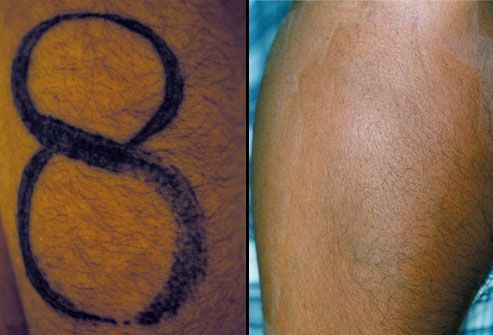
"But, you can get tattoos removed!", you cry. Why yes, yes you can. However, the reality of tattoo removal is much more painful that most people realize. Not only will it cause you personal discomfort, but it will also set you back a pretty penny. Tattoos are relatively cheap to have done, but removal costs can be multiple times more to get removed. This is just another point to consider when making your decision.

The other piece of this equation, at least for young people, is parental involvement. Some young folks go get tattoos and think that they can hide them from their parents. First of all, at least from a DeMolay perspective, this is very disrespectful and flies in the face of our first Precept - Filial Love. You can't and shouldn't try to hide this kind of life decision from your parents. Even if you don't agree, it's best to consult them and let them know what you are thinking.

So, if you want a tattoo, what should you do? We recommend that you sit down and create a pros and cons list. Weigh all of the options and share it with your parents. Taking time to make the right decision can only benefit you in the long run.

Frat! ~ "Dad" Seth Anthony


Thursday, March 1, 2012

Ron Swanson and Taxes

It's about this time of year that many young men around the country hear their parents bemoaning the fact that they have to do their taxes. Similarly, many of those same guys are filing their own taxes for the first time after having gotten a job in 2011. Tax season has come to be the bane of many an American's existence. 

However, for most of the younger guys out there, taxes really aren't that hard. Taking a little of responsibility now will pay off big later (in the form of a return and the ability to do your taxes without an accountant.) The folks over at the Art of Manliness have prepared a great article entitled "A Young Man's Guide to Doing His Taxes" about this very subject and I encourage you to read it.

I'm reminded of the seventh Preceptor - Patriotism. There is a time to be a hero of war as well as a patriot of peace. Doing your duty as a citizen of our country is the first step on that path.

Frat! ~ "Dad" Seth Anthony

Monday, November 28, 2011

The Art of Falling on Your Own Sword

Long time readers of this blog will know that I'm very involved in the Knights Templar in Pennsylvania. I have proudly been a member of a two different Commanderies and am currently serving as a Division Commander (kind of like a District Deputy.) I really enjoy my time with the Sir Knights and I continue to learn things from them. Anyone who dismisses the value of the older members of the Masonic fraternity needs to rethink their stance. We may need more young people in the fraternity, but without mentors to teach us about what has come before, there would be an empty space when it comes to knowledge.

The one thing that seems to "irk" younger folks is when older persons point out when they have done something wrong or made a mistake. This often happens in our fraternal world, especially with ritual. Many times we get corrected and think to ourselves "... it was only a tiny mistake, what does it matter?" Sometimes the older guys are just being picky, but most of the time they are doing it to help you improve. They really do mean well, even if it comes off a little rough. Recently, I had just such an experience in Commandery.

To put it simply, I made a wrong call when it came to something one of my local Commanderies wanted to do. I told them it was okay when in reality it was not. It's as simple as that. They came to me for advice, I gave them the answer I thought was correct without consulting my resources and in turn, I made a mistake. Was it a big mistake? Not particularly, but it was a mistake none the less. When the Grand Commander found out about this mistake, I received an e-mail stating that I would be reprimanded for the action. I was sad to say the least. I had made a call and it was wrong and now I had to pay the consequences. No one likes being punished, but we all have to pay our proverbial debts.

So, I did the only thing I could do. I responded to the email and said that it was indeed my call, that I took responsibility for the action, and that I understood the consequences. In return, I received a pleasant email back from the Grand Commander who was obviously gratified by my reaction. It is his job to uphold the Constitution of the body and in my case, that is exactly what he did. However, I'm sure many men have a hard time accepting the outcome of events when they are wrong. It is unusual for someone to take responsibility in this day and age.

Which brings us back to DeMolay. As DeMolays, we are instilled with the Seven Cardinal Virtues - Filial Love, Reverence for Sacred Things, Courtesy, Comradeship, Fidelity, Cleaness, and Patriotism. Notice what is missing from that list - honesty. It's such a simple trait that it is just expected that all DeMolays will strive to have it. It's not always the easiest trait to stick too, but it is incredibly important. The world respects men who can recognize the error of their ways, face the outcomes, and apologize.

We are all wrong at various times in our life. A real man will own up to his short comings and strive to make them right. He will not make excuses for his actions or try to hide them. Real men don't have to hide behind distractions and false reasoning.

Be a man and take credit when it is due and take the blame when it is squarely on your shoulders. You'll be surprised at how much respect you get.

Frat! ~ "Dad" Seth Anthony

Tuesday, August 24, 2010

Taking Responsibility

Recently, Gary Ridge , CEO for WD 40, shared his company pledge with the San Diego Professional Coaches Alliance. Thanks to "Dad" Dennis Snedden, who reads all kinds of good stuff, we are able to share this with you --

"I am responsible for taking action, asking questions, getting answers, and making decisions.

I won't wait for someone to tell me.

If I need to know, I am responsible for asking.

I have no right to be offended that I didn't 'get this sooner.'

If I'm doing something others should know about, I'm responsible for telling them. "


That's not a bad way to view any leadership role --- youth OR adult!

"Dad" Tom Labagh, EO in PA