Showing posts with label Humility. Show all posts

Monday, November 28, 2011

The Art of Falling on Your Own Sword

Long time readers of this blog will know that I'm very involved in the Knights Templar in Pennsylvania. I have proudly been a member of a two different Commanderies and am currently serving as a Division Commander (kind of like a District Deputy.) I really enjoy my time with the Sir Knights and I continue to learn things from them. Anyone who dismisses the value of the older members of the Masonic fraternity needs to rethink their stance. We may need more young people in the fraternity, but without mentors to teach us about what has come before, there would be an empty space when it comes to knowledge.

The one thing that seems to "irk" younger folks is when older persons point out when they have done something wrong or made a mistake. This often happens in our fraternal world, especially with ritual. Many times we get corrected and think to ourselves "... it was only a tiny mistake, what does it matter?" Sometimes the older guys are just being picky, but most of the time they are doing it to help you improve. They really do mean well, even if it comes off a little rough. Recently, I had just such an experience in Commandery.

To put it simply, I made a wrong call when it came to something one of my local Commanderies wanted to do. I told them it was okay when in reality it was not. It's as simple as that. They came to me for advice, I gave them the answer I thought was correct without consulting my resources and in turn, I made a mistake. Was it a big mistake? Not particularly, but it was a mistake none the less. When the Grand Commander found out about this mistake, I received an e-mail stating that I would be reprimanded for the action. I was sad to say the least. I had made a call and it was wrong and now I had to pay the consequences. No one likes being punished, but we all have to pay our proverbial debts.

So, I did the only thing I could do. I responded to the email and said that it was indeed my call, that I took responsibility for the action, and that I understood the consequences. In return, I received a pleasant email back from the Grand Commander who was obviously gratified by my reaction. It is his job to uphold the Constitution of the body and in my case, that is exactly what he did. However, I'm sure many men have a hard time accepting the outcome of events when they are wrong. It is unusual for someone to take responsibility in this day and age.

Which brings us back to DeMolay. As DeMolays, we are instilled with the Seven Cardinal Virtues - Filial Love, Reverence for Sacred Things, Courtesy, Comradeship, Fidelity, Cleaness, and Patriotism. Notice what is missing from that list - honesty. It's such a simple trait that it is just expected that all DeMolays will strive to have it. It's not always the easiest trait to stick too, but it is incredibly important. The world respects men who can recognize the error of their ways, face the outcomes, and apologize.

We are all wrong at various times in our life. A real man will own up to his short comings and strive to make them right. He will not make excuses for his actions or try to hide them. Real men don't have to hide behind distractions and false reasoning.

Be a man and take credit when it is due and take the blame when it is squarely on your shoulders. You'll be surprised at how much respect you get.

Frat! ~ "Dad" Seth Anthony

Thursday, March 31, 2011

Rating Ourselves

This article was sent to me by "Dad" Peter Brusoe, of Nation's Capital DeMolay. It has some good, thought provoking questions in it. Check it out!


March 10, 2011
The Modesty Manifesto
By DAVID BROOKS

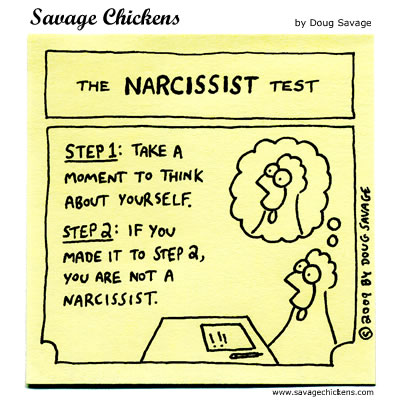
We’re an overconfident species. Ninety-four percent of college professors believe they have above-average teaching skills. A survey of high school students found that 70 percent of them have above-average leadership skills and only 2 percent are below average.

Men tend to be especially blessed with self-esteem. Men are the victims of unintentional drowning more than twice as often as women. That’s because men have tremendous faith in their own swimming ability, especially after they’ve been drinking.

Americans are similarly endowed with self-esteem. When pollsters ask people around the world to rate themselves on a variety of traits, they find that people in Serbia, Chile, Israel and the United States generally supply the most positive views of themselves. People in South Korea, Switzerland, Japan, Taiwan and Morocco are on the humble side of the rankings.

Yet even from this high base, there is some evidence to suggest that Americans have taken self-approval up a notch over the past few decades. Start with the anecdotal evidence. It would have been unthinkable for a baseball player to celebrate himself in the batter’s box after a home-run swing. Now it’s not unusual. A few decades ago, pop singers didn’t compose anthems to their own prowess; now those songs dominate the charts.

American students no longer perform particularly well in global math tests. But Americans are among the world leaders when it comes to thinking that we are really good at math.

Students in the Middle East, Africa and the United States have the greatest faith in their math skills. Students in Japan, South Korea, Hong Kong and Taiwan have much less self-confidence, though they actually do better on the tests.

In a variety of books and articles, Jean M. Twenge of San Diego State University and W. Keith Campbell of the University of Georgia have collected data suggesting that American self-confidence has risen of late. College students today are much more likely to agree with statements such as “I am easy to like” than college students 30 years ago. In the 1950s, 12 percent of high school seniors said they were a “very important person.” By the ’90s, 80 percent said they believed that they were.

In short, there’s abundant evidence to suggest that we have shifted a bit from a culture that emphasized self-effacement — I’m no better than anybody else, but nobody is better than me — to a culture that emphasizes self-expansion.

Writers like Twenge point out that young people are bathed in messages telling them how special they are. Often these messages are untethered to evidence of actual merit. Over the past few decades, for example, the number of hours college students spend studying has steadily declined. Meanwhile, the average G.P.A. has steadily risen.

Some argue that today’s child-rearing and educational techniques have produced praise addicts. Roni Caryn Rabin of The Times recently reported on some research that found that college students would rather receive a compliment than eat their favorite food or have sex.

If Americans do, indeed, have a different and larger conception of the self than they did a few decades ago, I wonder if this is connected to some of the social and political problems we have observed over the past few years.

I wonder if the rise of consumption and debt is in part influenced by people’s desire to adorn their lives with the things they feel befit their station. I wonder if the rise in partisanship is influenced in part by a narcissistic sense that, “I know how the country should be run and anybody who disagrees with me is just in the way.”


Most pervasively, I wonder if there is a link between a possible magnification of self and a declining saliency of the virtues associated with citizenship.

Citizenship, after all, is built on an awareness that we are not all that special but are, instead, enmeshed in a common enterprise. Our lives are given meaning by the service we supply to the nation. I wonder if Americans are unwilling to support the sacrifices that will be required to avert fiscal catastrophe in part because they are less conscious of themselves as components of a national project.

Perhaps the enlargement of the self has also attenuated the links between the generations. Every generation has an incentive to push costs of current spending onto future generations. But no generation has done it as freely as this one. Maybe people in the past had a visceral sense of themselves as a small piece of a larger chain across the centuries. As a result, it felt viscerally wrong to privilege the current generation over the future ones, in a way it no longer does.

It’s possible, in other words, that some of the current political problems are influenced by fundamental shifts in culture, involving things as fundamental as how we appraise ourselves. Addressing them would require a more comprehensive shift in values.

Monday, February 21, 2011

Great minds think alike...

On the heels of my article on false humility, the Art of Manliness has posted a blog on "False Pride." The article comes from George Lorimer, an editor at the Saturday Evening Post, published a series of fictional letters in that magazine in which a father, John Graham, imparts advice to his son, Pierrepont, throughout the different stages of the young man’s life. The letters were then compiled in the hugely successful 1901 book letters from a self-made merchant to his son.


Check it out! 


http://artofmanliness.com/2011/02/19/manvotional-letters-from-a-self-made-merchant-to-his-son-no-17-pride/

Frat! ~ "Dad" Seth Anthony

Thursday, February 17, 2011

A Taste of Humble Pie

Last evening I was watching one of my favorite TV programs on DVD. The Tudors, from the Showtime network, is a drama detailing the rise and fall of King Henry VIII of England along with his wives. The show is far from DeMolay appropriate, rating NC-17, but it does have some amazing characters and writing. I've just started in to Season 3, so, I'm pretty far into the series. In the first episode of the season I was struck by an amazingly astute observation by one of the characters. It appeared to relate directly to DeMolay and Masonry!

In this particular scene, a Cardinal of the Roman Catholic Church is talking to a priest. The priest, who is British born, is needed to write a pamphlet on behalf of the Church denouncing Henry VIII's rule and supporting a recent uprising. The young priest accepts and tries to go on his way to begin working on the pamphlet. The Cardinal stops him and says there is more to talk about. The Cardinal then tells the young man he is also going to be dispatched to France and Spain to act as a papal Legate (or ambassador) in an effort to try to sway the politics in England. Hesitantly, the priest agrees to this as well. The Cardinal then says he has one more matter to discuss. The Cardinal snaps his fingers and an attendant comes over with a biretta (a hat worn by Cardinals) and informs the young priest that he is to be made a Cardinal in exchange for his service. The priest is stunned! He says "I cannot accept this." The Cardinal looks at him, puzzled, and says "Why my son?" The priest responds "Because, I am not worthy." The Cardinal smiles and says "Young man, you have just committed the sin of pride. You are not being humble by denying this promotion. Rather, you are being prideful in thinking that your opinion of yourself is truer and better than that of the Holy Father and the Pope, who has extended this opportunity to you. A display of humility in this way is not humble, it's only self serving to make you feel better about yourself." (Editor's Note - I have paraphrased the actual language as I couldn't find the script or a suitable copy of the video to link to.)

Wow. I have never thought of it that way!

Many times in DeMolay and Masonry we are required to make the  "Humble Speech." Now, sometimes this speech is truly humble and other times it's only a show. Let me explain. When we are given an award or recognition in our lives the first response is usually something about not deserving the award, being totally surprised by it, or that you were only doing what anyone would do. In some cases that truly is how people feel, but more often than not, I'm willing to bet, that those speeches are just public shows of humility from the recipients of the honor. Those recipients are thinking to themselves "I'm glad I got this. I really deserved it. My hard work paid off." However, no one wants to hear a person say "You're darn right you should give this to me, because I earned it!" Rather, we go through the motions of a fake humility speech and accept the award with as much as grace as we can muster. That's what society has taught us to do.

Similarly, every once in a while a person will be nominated for an honor and receive notification as such. The person will then say "I don't deserve this honor and I can't accept it." Or, perhaps they didn't like a recent decision or something else being done by the organization giving the honor and use it as a bargaining chip to make themselves look like a martyr - something like "Well, since you didn't give John this honor last year, I can't accept it now." The only person this  behavior helps is the person who is denying the honor. It makes them feel better and makes them feel like they have leverage in the situation because they can point and say "Look, they tried to honor me, but I stood up for what I thought was right and denied it. Look at me, I'm a martyr for the cause!" While that may sway some people, it usually only serves to damage the relationship between the recipient and the organization. Also, it usually puts the organization in a bind because now they have to answer the tough question of why an individual hasn't been recognized for his achievements, or why the person wouldn't accept the award, thus damaging the group the person has worked so long to improve. Now, who does that really help? The answer is no one.

My Brothers, never commit the sin of prideful humility. When given an award or honor accept it, thank the person or organization offering it, and pledge to work hard and continue to validate their opinion of you. That's how we can all grow and better ourselves, our Lodges, our Chapters, and our lives.

Frat! ~ "Dad" Seth Anthony

Monday, October 25, 2010

Dealing with Adults

It's been a busy week here at Patton Campus; between our quarterly Board of Directors meeting, the Grand Lodge of New Jersey being in, and all of the other activities in and around the Masonic Village, campus has been alive with activity. This weekend, on Sunday, I had a practice for degree conferrals for one of the Masonic bodies that I'm a member of. That is where the story begins.

Before the practice I was sitting around talking to some other members of the cast and trying to organize a few things for upcoming weeks. I said hello to one of our older (than me) members and asked him if he was going to go to an event that was coming up. He replied that he was and then lamented that part of the event was going to occur on a Friday afternoon, which meant he would have to get off of work. I said that the Friday afternoon event was optional, but before I could finish he cut me off and said "... I'm going to that (event) whether you like it or not..." after which he stormed away. Everyone around me was suddenly quiet, as was I, because we were not sure what had caused this sudden anger. We went back to our conversations and continued with the practice, but I was still bothered by the episode.

After we finished I approached the fellow in charge of our area (like a District Deputy) who also witnessed the conversation. I brought up that the event made me feel uneasy and that I was unsure of what I did wrong. After some discussion we distilled that part of the problem may have been the age difference between this member and myself. As I have gotten more invovled in the group I have been assigned more responsibility. When you're dealing with a group who's average age is over 70 years old, you have to handle things a bit differently. He reminded me that some members may not take kindly to a 26 year old being given responsibility (and authority.) That was a good point and I now have a strategy for how to handle this situation in the future.

In much the same way, DeMolays have to know how to handle the adults that they work with. This is especially important as we are in the midst of the Take Control! initiative. While we want our members to take a bigger part in the operation of their Chapter, it has to be done in a way that is cooperative and engaging to both members and advisors. If a Master Councilor walks into an Advisory Council meeting and demands that he be allowed to spend down the treasury on a paintball trip, without having done any fundraising, the Advisors are going to balk (and rightfully so.) You can't just demand things because you're in charge. A better way to handle that situation would have been to go to the Advisory Council with a fundraising plan, that was worked on by all three Councilors, that includes a paintball outing. Now the Council is going to be more receptive to your ideas and willing to work with you.

One thing I have consistently run up against in my career, and in my life, has been the issue of being thought of as "too young." The current generation of DeMolays are going to have this problem as well. Why? It's a complicated issue, but I attribute it to two things. First is the DeMolay program itself. By being involved and active in DeMolay we are being taught skills and abilities that are preparing us for our careers and lives. Most people haven't received this kind of extra "training," which puts us at an advantage when going out into the real world. In many cases, people who are older than us didn't receive this kind of opportunity either, and perhaps they put in several years in "the trenches" before they could get to where they are. When a young person comes in with skills, abilities, and enthusiasm to advance, it can be shock that makes an older generation become defensive and wary. Breaking down that barrier is extremely difficult, and quite frankly, that is why I left my previous job to come the Youth Foundation. It behooves us all to be mindful of this kind of situation in the workforce and in our lives so that we can better understand how some people react to us.

The second part of the equation (at least as I see it) is part of how our generation was raised. I was taught all throughout school that I could do anything I put my mind to; that I was valued as a person and that my opinion mattered. The world was mine for the taking. You know what? It still is, but this has to be tempered by some humility. Sometimes we have to recognize that no matter how bright we think we are, no matter how great we think we've done, we are still young and have a lot to learn. When I was just out of college I was ready to take on the world. In return I took some bumps and bruises on the way as I found out that I needed to sit back and learn from others, because I was never going to have all the answers. One of my jobs involved being the guy that fired people. Let me tell you, when you are 24 years old and you are firing a man who is a 55 year old career professional, it's not easy.  I was called alot of names, was threatened, and more. However, because I had confidence in my abilities I was able to perform my job. The trick is walking that fine line between confidence and arrogance, and it can be a tough one to walk.

The next time that you're having trouble dealing with your parents, your teachers, your Advisors, or your boss, remember that showing a little humility and taking a step back to evalutate the situation may do you more good than plunging in head first. Sometimes the answer isn't about doing, it's about knowing when not to do. Huh. Sounds kind of like being an Advisor, doesn't it?

Frat!~"Dad" Seth Anthony