Showing posts with label Government. Show all posts

Saturday, January 19, 2019

Centennial Memory #65: al-Aksa Chapter Members Serve as City Officials


To celebrate the DeMolay Centennial, PA DeMolay will be counting down 100 memories worth celebrating that took place within the DeMolay Chapters and Jurisdiction of Pennsylvania.

In January of 1937, the Altoona city government was lead by members of al-Aksa Chapter, Order of DeMolay. Twenty three members of the Chapter served in various roles as city officials. The terms may have only been for a day, but this served as a great learning experience for the DeMolay youth. A formal inauguration was performed and Brother Robert Faulkender was sworn in as mayor. Below, you will find the article from the Altoona Mirror that explains all of the workings of this arrangements and a biography of the young men from al-Aksa Chapter who served in various city positions.


Until next time - "Dad" Joe Pullin

Thursday, June 2, 2016

Selling the DeMolay Product

In order for DeMolay to grow, chapters must find ways to sell the organization to the general public. DeMolay is a worldwide organization, however when brought up in conversation with our peers, a lot of people know nothing about us. As members and advisors, it is our job to get the word out to the community. Sometimes that means putting on the salesman hat and selling the organization the best that we can. How do we do that? Here are some examples of how to sell DeMolay, and some examples from chapters in Pennsylvania to prove that these methods work.

Advertise in Publications
One of the best ways to advertise DeMolay is to promote in the local community newspaper. Recently, Elizabethtown Chapter and Chester Pike Chapters have done just that. Chester Pike Chapter advertised their local flea market to the community, while also explaining briefly what DeMolay was in the advertisement. Elizabethtown Chapter publicized the activities they participated in within the community, including the Dodgeball for Dyslexia Tournament and the Chicken Pot Pie Dinner they hosted.

Promote within the local Schools
I've mentioned this example before, but since it deals heavily with the membership growth of Pennsylvania DeMolay, it's worth mentioning again. Friendship-Bray Chapter has recently sent flyers and other information to local school to help promote the organization to the young members of the community. Rob Caroselli, an FBC advisor, is also a Principal of Fox Chase Elementary School, which has helped promote DeMolay to the young men of their school. FBC has brought in 9 members to DeMolay so far this year because of this, and looks to bring in even more in the near future. Since this took place, other chapters across the state have started to put together programs to target local school districts as well.

Get your Government Officials to buy in to the product
This year for DeMolay Month, we had several DeMolay Chapters that received proclamations from local Government Officials. This means that they show support to the program. Congratulations to Allentown, Pilgrim, Friendship-Bray, Chester Pike, Elizabethtown and all the other chapters that have reached out and received support from their local Government Officials.

How did these chapters have so much success in promoting the organization? There are a few factors that go into selling your product:

Know your target audience: Recognize who it is you plan to reach out to, and find the right way to promote to that group. If you're reaching out to youth, you may want to impress upon them the fun activities that we provide. If you're trying to reach out to the parents, you may want to explain to them the scholarship opportunities, honor roll challenges and other activities that will make a parent happy. If you're reaching out to a local Representative, explain the community based activities and offer a helping hand. 

Confidence: This is one of the biggest keys to success. The way the product is presented is important to know whether a person is buying in. If your excited about what you're promoting, a customer will acknowledge that and be more likely to buy in themselves. Remain calm and remembers what drives you in DeMolay.


Keep it simple: The saying "less is more" is very true. Make sure all of the facts are covered, without dragging on for long periods of time. If they seem interested enough to ask questions, that means they are engaged and want to know more. If its a news article that you are writing, keep it to a few paragraphs.

Hopefully this helps give some insight into promoting DeMolay. Go out there and sell DeMolay proudly!

Until next time - "Dad" Joe Pullin


Thursday, February 11, 2016

Be Proud of DeMolay!

Since March is less than a month away, now is the best time to decide what your chapter will do for DeMolay Month. DeMolay Month is an entire month of celebrating the fun and exciting things that DeMolay has to offer. In Pennsylvania there is also a DeMolay Month Competition with awards presented at Convention to the top 3 chapters with the most points during the month.

So, what are some good ways to celebrate DeMolay Month? I put together a short list of ideas that your chapter may want to consider in order to make it the best DeMolay Month ever.
  1. Have your chapter go on a visitation to another DeMolay Chapter. It’s always interesting to see a DeMolay meeting from a different perspective.
  2. Invite Senior DeMolays to an activity, whether a meeting or fun activity. Most Senior DeMolays enjoy seeing their chapter again. It reminds them of why they enjoyed DeMolay so much when they were a member.
  3. Present the “Hi Dad!” book to a local library or school.
  4. Perform a community service project and a Masonic service project. DeMolay members take pride in providing service to the community and to the Masonic bodies.
  5. Invite your chapter’s Masonic Sponsors to a meeting or a fun activity. This will help show that your chapter appreciates the support the sponsors have been giving.
  6. Induct new members into the chapter. Membership is a big part of what makes DeMolay successful.
  7. Send in an article and photo about your DeMolay chapter to a local newspaper. This will help promote DeMolay through the local community.
  8. Contact local government officials and have them sign proclamations making March DeMolay Month.
  9. Make the week of March 18th, DeMolay Week.
  10. Advertise DeMolay. You could wear a DeMolay shirt to work or school, display the DeMolay logo on your vehicle or backpack, or change your profile picture to be DeMolay related on your social media account. Be proud of DeMolay!

March is almost here, so plan the month now before it’s too late. Look at the DeMolay Month checklist to see all of the ways your chapter can earn points. Good luck to all chapters, and may the odds be ever in your favor.

Until next time – “Dad” Joe Pullin 

Monday, May 13, 2013

PA's Senior DeMolays - Glenn Grell


Continuing our look at some of Pennsylvania's more well known Senior DeMolays, we come to Bro. Glen R. Grell, who serves in the Pennsylvania House of Representatives for the 87th District, which covers Cumberland County. Much of the information below comes from Rep. Grell's website.

Rep. Glen R. Grell was first elected in 2004 to the Pennsylvania House of Representatives for the 87th District in Cumberland County.  He is currently serving his fifth, two-year term in the state House.

A long-time civic and community leader, Grell is a lifelong resident of Cumberland County.  The 87th Legislative District is comprised of the townships of East Pennsboro, Hampden and Silver Spring, the Borough of Camp Hill, and the second voting precinct of Wormleysburg Borough, pending completion of the 2012 legislative redistricting process.


During his tenure in the House of Representatives, Grell has been the principal sponsor or House floor leader on legislation on subjects ranging from eminent domain; public pension reform; the 2012 Justice Reinvestment Initiative for corrections reform; revisions to the Uniform Commercial Code on secured transactions; a recodification of the Notary Public Law; tort reform and other subjects.  


Prior to being elected to the House, Grell was a practicing attorney in central Pennsylvania since earning his law degree from the Dickinson School of Law in 1981. He was formerly with the law firm of Klett, Lieber, Rooney & Schorling, having previously practiced in the areas of municipal and administrative law, government affairs, real estate law and finance, and public procurement.


As a highly-regarded real estate attorney, Grell was appointed in 2004 to serve on the Joint State Government Commission’s Advisory Committee on Real Property Law, in the first phase of its mission to advise the General Assembly on the codification of real estate laws in Pennsylvania.  During the 2005-06 legislative session, Grell was the prime House sponsor of legislation to protect private property rights and reform the Pennsylvania Eminent Domain Code, which became Acts 34 and 35 of 2006. 


Grell served as Deputy General Counsel to Pennsylvania Governor Tom Ridge from 1995 to 2000. In that capacity, he had primary responsibility for Commonwealth contracting, review and approval of Commonwealth contracts, deeds, leases, inter-agency agreements, and other obligations.  
He has also been a member of the Republican National Lawyers Association, Pennsylvania State Association of Township Solicitors, the Urban Land Institute, the West Shore Chamber of Commerce, the Harrisburg Regional Chamber of Commerce, Greater Harrisburg Association of Realtors, and Home Builders Association of Metropolitan Harrisburg.  Grell is also a graduate of Leadership Harrisburg Area.

Grell has been active politically at the local, statewide and national level for more than 25 years. He has served as an elected committeeman in Hampden Township, as deputy chairman and vice chairman of the Cumberland County Republican Committee, as county coordinator and regional field director for Gov. Tom Ridge’s gubernatorial campaign, as Pennsylvania co-chairman of Lawyers for Bush-Cheney, as a volunteer for the 2000 Republican National Convention, County Co-Chairman for Romney/Ryan 2012 and has been active in many other local and regional political campaigns.  

Grell is a 1974 graduate of Cumberland Valley High School and earned a Bachelor of Arts degree from The Johns Hopkins University in 1978, as well as his J.D. from Dickinson Law School in 1981.  He and his wife, the former Elaine Sanzotto, reside in Hampden Township.  They have two children: Cory, PMC and Senior DeMolay himself, a graduate of Pennsylvania State University, and Alyssa, a student at Millersville University.


His civic activities include serving on the Shippensburg University Council of Trustees since 1995; serving on the Board of the Pennsylvania Masonic Youth Foundation and as chairman of the Foundation’s Educational Endowment Fund Scholarship Committee; prior service as director of the Cumberland Valley Eagle Foundation from 2002-10.  He has also served as chairman of a Fund Distribution Panel of the United Way of the Capital Region and was a member of the Board of Directors of Domestic Violence Services of Cumberland and Perry Counties from 2006-12.  He is also an honorary member of the board of New Birth of Freedom Council, Boy Scouts of America, Hampden Township Volunteer Fire Company #30, the Mechanicsburg Sportsmen’s Club, and a member of the Central Pennsylvania College President’s Circle. 


Tuesday, April 16, 2013

By who's laws?!?


I apologize for the lack of a post yesterday - our internet connection has been on the fritz here at the office. However, I do a have post for you today to make up for it!Today's post is a bit dry, but it covers some important material.

When was the last time your Chapter updated their by-laws? If you don't know, then it might be time to revisit them - even if it's just to look at them and say they are okay. I found a great resource for writing and understanding by-laws at the Community Tool Box located at http://ctb.ku.edu. While the article isn't written specifically for fraternal organizations, it does offer some great tips on how to hand a revision of your by-laws. Check it out!


BEGIN ARTICLE

"The other officers of the local neighborhood association were growing increasingly angry at Mimi, the treasurer. She had been missing a lot of meetings and several of the organization's bill payments had been made late. Jose, the association's vice president, finally spoke up one night at yet another officers' meeting from which Mimi was missing: "This is getting ridiculous. How many meetings does she have to miss before we can remove her from office?"

Bylaws, if they were written thoroughly, would tell the officers in the neighborhood association exactly how to handle their dilemma.

What are bylaws?
Bylaws are the written rules that control the internal affairs of an organization. Bylaws generally define things like the group's official name, purpose, requirements for membership, officers' titles and responsibilities, how offices are to be assigned, how meetings should be conducted, and how often meetings will be held.

Bylaws also govern the way the group must function as well as the roles and responsibilities of its officers. They are essential in helping an organization map out its purpose and the practical day-to-day details of how it will go about its business. Bylaws serve as the legal guidelines of the organization, and the organization could be challenged in court for its actions if it violates them. For non-profits, at least, they often have to be filed with the Secretary of State of the state in which you're incorporated or registered (see Chapter 43, Section 4: Understanding Nonprofit Status and Tax Exemption for more information).

Bylaws are also sometimes mistakenly called standard operating procedures or policies and procedures, but those are really different things, as they tend to govern day -to-day operations and don't have the force of law, which bylaws do.

Why should an organization have bylaws?
Having bylaws can be helpful to almost any type of organization, regardless of size or purpose. Determining exactly how your organization is going to operate and putting that down on paper can help keep things running smoothly, provide the answers to tough questions (like what to do about a difficult officer), save enormous amounts of time and deliberation, help you define your mission, or structure the organization to correspond to that mission.

Having bylaws is necessary if your organization wants to apply for nonprofit status.

Having bylaws helps keep your organization focused on its intended purpose by specifically defining that purpose.

When should bylaws be written?
If your organization doesn't yet have bylaws, any time can be a good time to write them, but here are a few specific situations in which you should consider writing bylaws:

  • When your organization is just starting out.
  • When you feel you need clarification on how officers are elected, the organization's purpose, or other basic matters relating to how your group operates.
  • When your organization is undergoing a big change in its purpose or the way it is run.
  • When you want to apply for nonprofit status.
  • How do you write bylaws?

Before you begin, think a bit about whether you really need bylaws and what purpose they will serve for your organization. For non-profit organizations, bylaws are actually a legal document that the organization is responsible for upholding. For organizations that provide direct service, bylaws usually don't apply to the organization as a whole; instead, they might delineate the board's powers as opposed to those of the Director. Towns work the same way: there are bylaws that specify what people can and can't do (just like state laws), but the various boards often have their own bylaws. So take some time to think about what the bylaws are for - the board? The organization as a whole? Once you have a good idea of the purpose of your bylaws, you can proceed with writing them.

1. Gather examples of the bylaws of similar organizations for reference.

Seeing how other groups like yours have written their bylaws will be immensely helpful. Getting examples from several different groups will let you see a good range of styles and ideas. You shouldn't just copy another group's bylaws and then stick your organization's name in here and there, but other groups' bylaws can make a good rough guide.

2. Decide by whom and how the bylaws will be written and approved.

Will it be your board of directors, your officers, your steering committee, or some combination of these groups? Will you approve portions of the bylaws by consensus, or will each part have to be agreed upon unanimously? Before you start, know how you're going to make these decisions, and then choose one person to be in charge of writing up the first draft and making additional changes. If the bylaws are going to be long or complex, you might divide up the writing tasks, with each of two or more people writing particular sections.

3. Write a first draft of your bylaws.

The group that will approve the bylaws should meet at least once to come up with a rough outline for the writer before writing begins. Depending on how much you already know about how your organization is going to operate, the first draft may be easy for one person to complete on his or her own or it may require you to meet as a group and work together. This is not the time to get into lengthy discussions about the particulars of the bylaws; instead, you should put together enough generally agreed-upon information for the writer to compose a first draft, and leave the specifics for later discussion.

When writing your first draft, you may find that filling in a general bylaws outline (such as the one included in Tools at the end of this section) is much easier than writing it from scratch. You can leave blanks on specific things you're not sure about; those can easily be filled in when you meet again as a group.

Below is a list of items that typically appear in bylaws. You may decide to alter this somewhat for your own purposes, so keep in mind that your bylaws don't necessarily have to be arranged in this order or include all of these components, and you may decide to add components of your own.

Article I. Name and purpose of the organization.

There should be no doubt as to the official name of your organization. If there are other names used to refer to your group (shortened versions that are easier to say in casual conversation, for example), you might mention here that your group is also known as these names. The name of the organization is usually indicated in bylaws with the words, "This organization shall be known as" or "The official name of this organization is" as seen in the example below.

Clearly defining your group's purpose helps you keep your focus. Will the primary purpose be service, social, political, or something else? Is the organization focused on a single issue, a set of issues, a geographic area, or a specific population?

Example:

From the bylaws of the Baylor University Staff Council:

ARTICLE I. Name and Purpose

Section 1. The name of this organization shall be the Baylor University Staff Council.

Section 2. The purpose of this organization is to advance the exchange of information within the staff of the University by providing a forum for the expression and exchange of ideas and concerns of the staff at Baylor University.

This may also be a good place to include your vision and mission statements (see Chapter 8, Section 2: Proclaiming Your Dream: Developing Vision and Mission Statements).

Article II. Membership.

This explains what the members' rights are, what their limitations are, and what, if any, requirements there are for membership (if membership is open to anyone, say so!). It should also clearly state any required fees, attendance requirements, and any circumstances in which membership can be revoked. If you are going to allow honorary memberships, the particulars about that should be included here as well.

Example:

From the bylaws of the University of Virginia's College at Wise Student Government Association:

ARTICLE II: Membership

Section 1: All persons enrolled for six or more semester hours at The University of Virginia's College at Wise are considered members of the Student Government Association during the time of their enrollment and shall be entitled to all the rights and privileges thereof.


Article III. Officers and decision-making.

In this section of your bylaws, you should explain:

Governing structure: The pecking order in your organization; who reports to whom in terms of the overall governing structure. The bylaws will explain that the Director is hired and overseen by the Board, for instance, but won't set out who other staff members report to or what their duties are: that's the province of the Director and the day-to-day operation of the organization.
Officers: Official offices of the group, with their correct titles and required duties specifically outlined, and how long their terms should run.
Procedures for filling and vacating offices: If an office is to be elected, who votes on it and how; if an office is to be appointed, who makes the appointment. Also, what must happen in order to remove someone from office.
Committees: What, if any, standing committees (committees that are ongoing) there will be, how special committees (committees that only exist for the duration of completing a specific task or project) will be formed, how committee chairs will be chosen, and how members will be appointed to those committees.
Decisions: How decisions are to be made and how many members and/or officers are required for quorum (the number that must be present for official business to take place).
Amendments: How changes to the bylaws should be made. Usually it requires previous notice (for example, telling members at two consecutive meetings that a bylaw amendment will be voted on at the third meeting, or sending out a postcard to all members telling them that a bylaw amendment will be voted on and when) and a two-thirds majority vote.

There are numerous other areas your bylaws might cover, depending on the nature of your organization.  Some common ones include standing (i.e., permanent) and other committees, conflict of interest, indemnification of officers (this means that officers and board members can't be held personally liable for the debts of the organization, or prosecuted for illegal organizational activities, unless they were caused by the illegal actions of one or more particular officers), the specific duties of the board as opposed to those of the director or CEO -- the list can go on.  Try to think about all the structures that have to do with governing the organization.  The more nearly complete your bylaws are, and the better they reflect the actual character and workings of the organization, the more useful they'll be.


Article IV. General, special, and annual meetings.

This part of your bylaws should explain how often meetings are to be held. This doesn't have to be very specific, but it should be clear whether the organization will meet on a regular basis or if it will meet only as needed. The bylaws should explain who has the authority to call meetings and how notice of upcoming meetings must be given to members. You should also describe your meeting procedures (i.e. whether you're going to use Robert's Rules of Order, the prerogatives of the Chair, who gets the floor and how, etc.)

Special meetings should also be covered in this section of the bylaws. Special meetings are sometimes restricted to the board or the officers. This section should explain how special meetings are to be arranged, who has the authority to call a special meeting, what sort of business may be conducted at a special meeting, and who may attend.

Finally, if your organization will be having an annual meeting of any sort, the specifics of how that will work should be included in this part of the bylaws. Annual reports should be covered here as well - when they'll be delivered, what they'll include, who prepares them, etc.

Example:

From the bylaws of the Producers Guild of America

ARTICLE IV: Meetings of Members

Section 1. Regular Meetings. The Annual Meeting of the members of the Guild shall be held on the first Monday in May in each year in the County of Los Angeles, at such hour and place as the Board may designate, for the purpose of electing Directors and Officers, considering reports of the affairs of this Guild and transacting such business as may be properly brought before the meeting. If, in the opinion of the Board of Directors, the Annual Meeting can not be conveniently held on the first Monday of May, it shall be empowered to call said Meeting on a Monday during either the month of May or the month of June of the same year.

Section 2. Special Meetings. Special meetings of the members of the Guild shall be held whenever called by the Board of Directors, and such special meetings shall also be held within thirty days after being so requested in writing by at least 20% of the members in good standing, which request shall specify the purpose of such meeting and shall be addressed to the Secretary of the Guild. If upon receipt of any such request the Secretary shall fail to call and give notice of a special meeting, the members requesting shall have the right to fix a time and place for such meeting and give notice thereof in the manner hereinafter specified.

Section 3. Notice Of Meetings. Notice of the time and place of meetings of the members, whether regular meetings or special meetings, shall be sent to each member of the Guild not less than seven, nor more than fourteen days before the date of said meeting. All such notices shall be addressed to the members at the last address registered with the Guild, and shall be given by personal delivery, telegraph or mail, telegraph or postage charges prepaid.

Section 4. Adjourned Meetings And Notice Thereof. Any members' meetings, regular or special, may be adjourned from time to time by a vote of the majority of the members present, in person or in proxy, and when any members' meeting is so adjourned no notice of adjournment need be given unless the adjournment shall be for a period in excess of thirty (30) days.


Article V. Board of Directors

If your organization has a board, this section should describe what its role is in the group, how many people will be on the board, how long a board member's term will run, how often the board will meet, and how board members will be appointed or selected. It should also designate how many board members must be present for quorum, and how members can be removed from the board.

Example:

From the bylaws of the Federation of American Women's Clubs Overseas

ARTICLE V: Board of Directors

Section 1: Number, selection. The Board of Directors shall consist of the elected officers of the Corporation and the Secretary.

Section 2: Qualifications. At the time of election, all elected Directors must be American members of Regular or Associate member clubs.

Section 3: Vacancies. Any vacancy occurring among the Directors between Biennial Conferences shall be filled in the following manner:

a. The office of President shall be assumed by an elected officer only, in the order of First, Second and Third Vice-Presidents.
b. In the absence or resignation of a Vice-President, the President shall appoint a replacement with the approval of the Board of Directors.
c. The Assistant Treasurer shall assume the duties of the Treasurer in her absence or resignation.
d. The appointment of a Secretary and an Assistant Treasurer pro tempore is left to the discretion of the acting President.

Section 4: Powers.

a. The Corporation shall be governed by the Board of Directors.
b. The Board of Directors shall have full charge of the property and business of the Corporation, with full power and authority to manage and conduct same, subject to the instructions of the Council.
c. The Board of Directors shall have the power to remove Officers and Directors for cause, pursuant to the instructions of the Council.

Section 5: Meetings. There shall be at least one meeting of the Board of Directors annually.

Section 6: Quorum. Two-thirds of the members of the Board of Directors present or represented by proxy shall constitute a quorum at a Board meeting.

Section 7: Resignations. All resignations shall be made in writing and addressed to the President.


After you have completed your draft of the bylaws, make copies for all the people who will be involved in the process of approving them. If possible, get copies to them in advance of your meeting so they'll have a chance to go over them carefully before meeting.

4. Meet as a group to discuss the proposed bylaws.

Get copies of the proposed bylaws out to the group that's going to edit or go over them well in advance of the meeting so they'll have time to reflect and can have their questions, issues, prospective changes, or concerns ready. This will not only save time, but it will also make it much more likely that errors or ill-considered bylaws will be caught, and that the final version will mirror what everyone really wants.

Get together and go over the bylaws together. You may find this really calls for one person taking charge and reading off the bylaws for approval, or if you have a smaller or more casual group you may take turns reading the articles and sections aloud. Go over each article and section individually for approval, and do so carefully. It may seem tedious, but your bylaws are very important and should be handled with attention to detail.

This is also the time you should consider whether your bylaws are fair and democratic. Do they distribute the power in your organization in a fair way? Do they allow members enough of a voice in how the organization is run?

Take note and discuss any changes, voting when necessary. Depending on how long and how complicated your bylaws are, this may take more than one meeting. When you've worked through and made all the changes, adjourn to have the final draft made.

5. Complete and approve the final draft.

Again, make sure that people get copies ahead of time. If the whole membership has to vote on the bylaws, you need to figure out how that's going to happen, especially if the membership is large. You may find it easiest to send them out a letter explaining the history of the bylaws (who wrote them, what the process was, etc.) and an approve /disapprove form to send back. If you do it this way, there should be a last date to receive the votes, and tallies will be made based on either the whole membership or the number of votes received. Another option would be to designate a meeting at which the bylaws will be voted on and give the membership written notice about the meeting in advance.

Make all the agreed-upon changes to the bylaws and meet again to go over the final draft. When everyone is satisfied that the changes have been made correctly and the bylaws are as they should be, you should vote to approve bylaws. The date that the final draft was approved should appear at the bottom of the bylaws in all future copies.

6. Be sure copies are given to anyone who needs them.

All officers, members of your board, and committee chairs should be given copies of the bylaws. Also, you should either give copies to all members, or make copies easily available to those who want them.

7. Use your bylaws!

So now your new bylaws are in effect - that's wonderful! But they're not worth much if you don't actually use them. If your organization has a parliamentarian - an officer or a consultant who advises the officers and board on parliamentary procedure and generally makes sure that meetings are run smoothly and according to your bylaws - then he or she can help remind people whenever the organization, one of its officers, a board member, or a regular member is doing something contrary to your bylaws.

Otherwise, you will just have to make sure that your officers make an effort to keep the bylaws in mind when doing your organization's business. Be sure that a copy of the bylaws is handy any time that official organization business is being conducted. If there is ever any question about how exactly you should proceed, don't hesitate to consult the bylaws. And if you come upon a situation you didn't think of when writing your bylaws, consider dealing with that in the final step of the bylaw process, which we'll talk about next.

8. Review and amend your bylaws periodically.

Getting together as a group from time to time to go over your bylaws and, if necessary, amend them will insure that your board, officers, and members remain familiar with the bylaws. It also will allow you to gauge whether your bylaws accurately reflect the direction of the organization, whether changes need to be made in the light of events since the bylaws were written, or if any clarifications need to be made.

Bylaw amendments can be suggested at any time, either by anyone, if that's the way you prefer it, or by a group of people (if you use this method, be sure to specify how many people must propose the change), or by any board member whatever specifications work best for your organization. Not matter what, there should be room for those kinds of suggestions whenever there's an issue.

In Summary

Bylaws can be easy to write and even easier to change if you are well-organized and have a good plan in place for how to go about it. By following a simple outline, just about anyone can write bylaws for a new or existing organization, and having bylaws in place will help eliminate confusion and encourage consistency in the ways your organization is supposed to go about the things you have to do to reach your goals.


Thursday, January 17, 2013

Inaugural Oaths

The following was taken from the website of St. John's Lodge No. 1, Ancient York Masons, of the Grand Lodge of New York. It details the history of the Washington Inaugural Bible, which is of interest to many members of the Masonic family.


After the conclusion of the War of Independence, New York City became the first Constitutional capital of the United States, and it was there on April 30th, 1789 that Brother George Washington was to be sworn in as the first President of the United States.

On a platform erected for the purpose, in front of the then City Hall, were gathered the Congress of the United States, with George Washington and Chancellor Livingston, Grand Master of Masons in the State of New York. In front of them was an immense concourse of citizens. It was indeed a great holiday occasion; the Revolutionary War was over and peace reigned throughout the country.

Everything was ready for the administration of the oath of office to the President of the new government, when it was discovered that a Holy Bible had not been provided on which the President-Elect could swear allegiance to the Constitution. Jacob Morton, who was Marshal of the parade, and at that time Master of St. John's Lodge, was standing close by. Seeing the dilemma they were in, he remarked that he could get the altar Bible of St. John's Lodge, which met at the Old Coffee House on the corner of Water and Wall Streets. Chancellor Livingston begged him to do so. The Bible was brought, and the ceremony proceeded. The stately Washington took his oath with his right hand resting on the Bible which had been opened to Genesis XLIX and L. His head bowed in a reverential manner, he added in a clear and distinct voice, "I swear, so help me God!" then bowing over this magnificent Bible, he reverently kissed it, whereupon Chancellor Livingston exclaimed in a ringing voice, "Long live George Wash­ington, President of the United States!"

To preserve the memory of this auspicious event, a page was inserted in the Bible with the following inscription:

"On this sacred volume, on the 30th day of April, A. L. 5789, in the City of New York, was administered to George Washington, the first president of the United States of America, the oath to support the Constitution of the United States. This important ceremony was performed by the Most Worshipful Grand Master of Free and Accepted Masons of the State of New York, the Honorable Robert R. Livingston, Chancellor of the State.

Fame stretched her wings and with her trumpet blew.
Great Washington is near. What praise is due?
What title shall he have? She paused, and said
‘Not one - his name alone strikes every title dead."

The Bible has since been used at four other inaugurations: President Harding in 1921; President Eisenhower in 1953; President Jimmy Carter in 1977 and President George Bush Sr. in 1989. It was also to have been used for the inauguration of George W. Bush in 2001, but rain prevented its use. It has also been present at numerous public and Masonic occasions, including Washington's funeral procession in New York, December 31st, 1799; the introduction of Croton water into New York City, October 14th, 1840; the dedication of the Masonic Temple in Boston, June 24th, 1867, and of that in Philadelphia on May 24th, 1869; the dedication of the Washington monument in Washington, February 21st, 1885 and its rededication in 1998; and the laying of the cornerstone of the Masonic Home at Utica on May 21st, 1891.

It was also used at the opening of the present Masonic Hall in New York on September 18, 1909, when St. John's Lodge held the first meeting, and conferred the first Third Degree, in the newly completed Temple. More recently it featured at the World Fair in New York, has been displayed at the CIA Offices outside Washington D.C., and at the Famous Fathers & Sons exhibition at the George Bush Memorial Library outside Dallas, Texas in 2001.

The Bible is the King James Version, complete with the Apocrypha and elaborately supplemented with the historical, astronomical and legal data of that period. It contains numerous artistic steel engravings portraying Biblical narratives from designs and paintings by old masters and engraved by the celebrated English artist, John Stuart.

The Bible is still in active use by the Lodge. When not being used by St. John’s Lodge or on tour, it is on display at Federal Hall, Wall Street, New York.

Monday, May 21, 2012

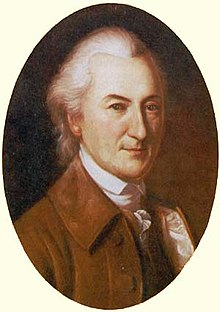
The Wisdom of John Dickinson


As we  march through this year of politics, I often find that looking back on some of the leaders of our nation continues to be useful. We all know the big names - George Washington, Thomas Jefferson, John Adams, and Benjamin Franklin. However, we often overlook some of the other key players in our nation's history. They are the lesser known Founding Fathers. These men were no less brilliant, as their quotes show. Take some time to think about them and what they mean. How can you apply them in your chapter and take control of you organization?

Our Founding Father for today is someone you might have heard of and not even know it. John Dickinson, the namesake of the Dickson Law School, played a major part in the founding of our country and of Pennsylvania


The Wisdom of John Dickinson

"Nothing is more certain than that the forms of liberty may be retained when the substance is gone. In government, as well as in religion, "the letter killeth, but the spirit giveth life"" - "The Political Writings of John Dickinson"

"Kings or parliaments could not give the rights essential to happiness. ... We claim them from a higher source - from the King of kings, and Lord of all the earth. They are not annexed to us by parchments and seals. They are created in us by the decrees of Providence, which establish the laws of our nature. They are born with us; exist with us; and cannot be taken from us by any human power without taking our lives. In short, they are founded on the immutable maxims of reason and justice. It would be an insult on the Divine Majesty to say that he has given or allowed any man or body of men a right to make me miserable."

"Let us take care of our rights and we therein take care of our prosperity. Slavery is ever preceded by sleep" "The Political Writings of John Dickinson"

"As Congress is now to legislate for our extensive territory lately acquired, I pray to Heaven that they may build up the system of the government on the broad, strong, and sound principles of freedom. Curse not the inhabitants of those regions, and of the United States in general with a permission to introduce bondage [slavery]"

"No free people ever existed, or can ever exist, without keeping the purse strings in their own hands. Where this is the case, they have a constitutional check upon the administration, which may thereby by brought into order without violence. But when such a power is not lodged in the people, oppression proceeds uncontrolled in its career, till the governed, transported into rage, seek redress in the midst of blood and confusion."


Thursday, April 5, 2012

The Wisdom of William Penn

With the Republican Presidential nomination looking more certain, it seemed like another "Wisdom" article is in order. This article is part of series that consists of thoughtful quotes from leaders of our country in the past. You'll recognize most of the names, but in many cases not the quotes. Take some time to think about them and what they mean. How can you apply them in your chapter and take control of you organization?

Today, I'm going a bit askew - instead of a national founding father, I'm going with a more localized person. We all know that Pennsylvania is named after William Penn, but how many have really read his thoughts and wisdom?

The Wisdom of William Penn
  • "I expect to pass through this world but once. Any good therefore that I can do, or any kindness or abilities that I can show to any fellow creature, let me do it now. Let me not defer it or neglect it, for I shall not pass this way again."
  • "Right is right, even if everyone is against it, and wrong is wrong, even if everyone is for it."
  • "A good end cannot sanctify evil means; nor must we do evil, that good may come of it...To do evil that good may come of it is for bunglers in politics as well as morals." (From Some Fruits of Solitude)
  • "Force may make hypocrites, but it can make no converts." (Letter to Lord Arlington, while imprisoned in the Tower)
  • "The humble, meek, merciful, just, pious and devout souls everywhere are of one religion and when death has taken off the mask, they will know one another, though the diverse liveries they wore here make them strangers."
  • "There is a zeal without knowledge, that is superstition. There is a zeal against knowledge, that is interest or faction; there is a zeal with knowledge, that is religion; and if you will view the countries of cruelty, you will find them superstitious rather than religious. Religion is gentle, it makes men better, more friendly, loving and patient than before."
  • "Truth often suffers more by the heat of its defenders, than from the arguments of its opposers. Never marry but for love; but see that thou lovest what is lovely. Sexes make no Difference; since in Souls there is none..."
  • "Between a Man and his Wife nothing ought to rule but Love. Believe nothing against another but on good authority; and never report what may hurt another, unless it be a greater hurt to some other to conceal it."
  • "If thou thinkest twice before thou speakest once, thou wilt speak twice the better for it."
  • "Friendship is the union of spirits, a marriage of hearts, and the bond thereof virtue"
  • "There can be no friendship when there is no freedom; Friendship loves the free air, and will not be fenced up in straight and narrow enclosures."
  • "Speak properly, and in as few words as you can, but always plainly, for the end of speech is not ostentation, but to be understood."
  • "Equivocation is half way to lying and lying the whole way to hell."
  • "Inquiry is human; blind obedience brutal. Truth never loses by the one but often suffers by the other."
  • "He that has more Knowledge than Judgment, is made for another Man's use more than his own."
  • "Fear and Gain are great Perverters of Mankind, and where either prevail, the Judgement [of God] is violated."
  • "No pain, no palm; no thorns, no throne; no gall, no glory; no cross, no crown."

Thursday, March 29, 2012

The Wisdom of John Adams

As the final days of the primary elections wrap up around our country, I find myself reflecting back on the great leaders of the past. This article is part of series that consists of thoughtful quotes from leaders of our country in the past. You'll recognize most of the names, but in many cases not the quotes. Take some time to think about them and what they mean. How can you apply them in your chapter and take control of you organization?


The Wisdom of John Adams
  • A desire to be observed, considered, esteemed, praised, beloved, and admired by his fellows is one of the earliest as well as the keenest dispositions discovered in the heart of man.
  • A government of laws, and not of men.
  • Because power corrupts, society's demands for moral authority and character increase as the importance of the position increases.
  • Democracy... while it lasts is more bloody than either aristocracy or monarchy. Remember, democracy never lasts long. It soon wastes, exhausts, and murders itself. There is never a democracy that did not commit suicide.
  • Facts are stubborn things; and whatever may be our wishes, our inclinations, or the dictates of our passions, they cannot alter the state of facts and evidence.
  • Great is the guilt of an unnecessary war.
  • Here is everything which can lay hold of the eye, ear and imagination - everything which can charm and bewitch the simple and ignorant. I wonder how Luther ever broke the spell.
  • I always consider the settlement of America with reverence and wonder, as the opening of a grand scene and design in providence, for the illumination of the ignorant and the emancipation of the slavish part of mankind all over the earth.
  • I have accepted a seat in the House of Representatives, and thereby have consented to my own ruin, to your ruin, and to the ruin of our children. I give you this warning that you may prepare your mind for your fate.
  • I must study politics and war that my sons may have liberty to study mathematics and philosophy.
  • If we do not lay out ourselves in the service of mankind whom should we serve?
  • In politics the middle way is none at all.
  • Let us tenderly and kindly cherish, therefore, the means of knowledge. Let us dare to read, think, speak, and write.
  • Liberty cannot be preserved without general knowledge among the people.

Monday, March 12, 2012

The Prize Fight of the Week

The election season always seems to take its toll on community organizations. Brotherhood may reign supreme in DeMolay, but everyone has their own political passions that can sometimes bleed into the fraternal world. Every person is welcome to their opinions and ideas, but we must be careful to not infringe on anyone else when expressing our own. Whether you believe yourself to be conservative or liberal, libertarian or green, or any other part of the political spectrum, there is a time and a place to discuss those opinions; DeMolay should rarely, if ever, be that time and place.

"But, "Dad" Anthony, isn't government an important part of DeMolay teachings?" you ask. Why, yes it is! However, there is a line to be drawn between government and politics. In DeMolay, we are welcome to discuss government until the cows come home, but politics is something we should avoid. To help you understand this difference, I direct you http://www.differencebetween.com/difference-between-government-and-vs-politics/ where a great article details the specifics.

In our Chapters, we should talk about the political process and how those elected to those positions are performing. What we should avoid is heated debate over specific issues. Let me give you an example. Let's say your local congressmen has signed a bill that opposes a controversial issue. You are welcome to discuss the statements he publicly makes regarding the bill, and even the community reaction. What you should avoid doing is discussing the pros and cons of his stance or inviting debate about the topic.

It's important for our members to recognize the way our democracy works and be able to participate in it when they are of age to do so. So, don't be afraid to discuss government in your Chapter, but an avoidance of politics is always a good policy to have.

Frat! ~ "Dad" Seth Anthony

P.S. - This is one of my favorite videos about government and politics. While it relates to government in Ireland, it's a great way to think about this topic.


Thursday, March 8, 2012

The Wisdom of Thomas Jefferson

As the final days of the primary elections wrap up around our country, I find myself reflecting back on the great leaders of the past. I'm going to run a series of articles over the next couple of weeks that mainly consist of thoughtful quotes from leaders of our country in the past. You'll recognize most of the names, but in many cases not the quotes. Take some time to think about them and what they mean. How can you apply them in your chapter and take control of you organization?


The Wisdom of Thomas Jefferson

  • The democracy will cease to exist when you take away from those who are willing to work and give to those who would not.
  • Power is not alluring to pure minds.
  • What country can preserve its liberties if its rulers are not warned from time to time that their people preserve the spirit of resistance?
  • Timid men prefer the calm of despotism to the tempestuous sea of liberty.
  • A free people [claim] their rights as derived from the laws of nature, and not as the gift of their chief magistrate.
  • I would rather be exposed to the inconveniences attending too much liberty than to those attending too small a degree of it.


Thursday, February 2, 2012

Senator, Congressman, Captain, & Brother

This post is part of series of entries written by the Elected State Officers of PA DeMolay. Each of them have been assigned topics to discuss and offer their opinions on. Today's post is offered by Bro. Neal Skibicki, State Treasurer. Enjoy!

Since its beginning, the Order of DeMolay was noted for its support of patriotic ideals and virtues. This is mostly likely attributed to the diligence and effort of the members of the Order in practicing the seventh cardinal virtue - Patriotism. While every DeMolay should embody this virtue, some have gone above and beyond the call of duty in representing our great nation.

 Most of us are familiar with a few famous DeMolays such as  Terry Bradshaw and Walt Disney, but there are even more of us who have given so much to our country. For example, Bro. Robert B. Anderson (Former Secretary of the Treasury, Former Secretary of the Navy), Bro. Paul E. Tsongas (Former U.S. Senator from Massachusetts and 1992 Democratic Presidential Candidate), Bro. Mike Enzi (US Senator from Wyoming), Bro. and Captain Lance P. Sijan (Vietnam Prisoner of War and Congressional Medal of Honor Recipient), Bro. and General John P. McConnell (Fighter Pilot and Former United States Air Force Chief of Staff), Bro. James H. Douglas (Governor of Vermont), Bro. Charles Robb (Former Governor of Virginia, and also a Former US Senator from Virginia), and even Bro. and President Bill Clinton. Although they may hold high positions in our government or military forces, you can call each and every one of these men your brother, and know that many of them would not have "reached for the stars" as they did if they had not been members of DeMolay.

Bro. Carl Albert, Former Speaker of the U.S. House of Representatives, said, "In reflecting on my forty-nine years of public service, I find that the precepts of the Order of DeMolay have been invaluable to me. This was particularly true the two times I was just a heartbeat away from the presidency of the United States and faced very difficult decisions. My public life, as well as my private life, has been guided by the DeMolay vow – to love and serve God, my country, and my fellow man". Take those words to heart and always remember each and every one of our famous patriot brothers in history was just like you when they were growing up, a member of this great fraternity DeMolay.

Bring your Patriotic pride to your Chapter's Patriots Day Observance and our annual Patriots Class in Reading, PA, where we will be honoring another great Patriot, and proud supporter of DeMolay, Illustrious "Dad" Russel W. Baker, 33°, and Deputy for Pennsylvania of the Ancient and Accepted Scottish Rite, Northern Masonic Jurisdiction!

Monday, December 13, 2010

Bro. Walker Walks the Walk

On June 18, 1960, a young man by the name of C. Alan Walker was one of one hundred young men in the charter class at the Institution of Clearfield Chapter, Order of DeMolay   

Just last week, that same C. Alan Walker was nominated to serve as Community and Economic Development Secretary for Pennsylvania Governor-Elect Tom Corbett.

Bro. Walker, still a resident of Clearfield, is the president and CEO of Bradford Energy Company, Inc., and serves as a member of the board of directors of the Pennsylvania Chamber of Business and Industry and the Pennsylvania Coal Association.  In nominating him to the position, Mr. Corbett noted that Walker “has an impressive record of achievement, in both business and civic arenas.  He will be a valuable resource to the administration as we work to turn our economy around and take Pennsylvania into the future.”

Bro. Walker is a graduate of both Bucknell University, where he earned a bachelor’s degree in economics and where he serves as a trustee, and Penn State University, where he earned his master’s in business.  He is a director of the Clearfield YMCA, president of the Bigler Civic and Recreation Association, past president of th Bradford Soccer Association and serves as a director for the Clearfield Hospital Board and the Clearfield Foundation for Health Services.    Among his many honors, he has received the DeMolay International Active Legion of Honor and the “Service to Humanity” Award from Bucknell University.

Bro. Walker has also spent a lifetime encouraging young people to be community-spirited and civic-minded.  Let me share with you just two examples with which I am well-acquanted.  We know that he has been supportive of Pennsylvania DeMolay through regular Key Man Scholarship contributions.  He has also donated his Penn State Football Tickets to be used for membership recruitment incentives (just ask Jake Palo, Past State Master Councilor, who was a brand new member of Erie Chapter when he won one of these tickets!)   In addition, I personally benefited from his mentoring and encouraging character when, at a very young age of 24, I decided to run for Clearfield Borough Mayor.  Bro. Walker was one of my earliest supporters, both in encouragement and donation, and was certainly an important part of my early success!

Please join me in congratulating this outstanding Pennsylvania Senior DeMolay as he continues his service to his community and all of Pennsylvania!

Fraternally,

"Dad" David W. Berry, Executive Secretary