Thursday, December 9, 2010

Just what is a fez?

Recently, I've had some people question my obsession with fezzes (along with my sanity.) I honestly cannot explain my fascination with these goofy little hats, other than to say they remind me of a golden age of fraternalism, when every man had his club to go to and other men to call his brothers. To me, it represents a time of social interaction and friendship that we seem to have lost today. However, the fez is an ancient adornment, with quite a history. I decided to dig up some facts and share with you the real deal on the history of the fez.

Let's start with the name. It probably came to be known as a "fes" because the red hue, that the hat so often has, is obtained by dying wool with the juices of the "fes" berry. The name was anglicized to "fez" and is now often thought to denote that the little hat first took root in the city of Fez, in Morocco. There is an oft told myth that the red color and name came from the sacking of the city of Fez by Muslims, which resulted in the subsequent killing of thousands of Christians. The story further claims that the invaders dipped their hats in the blood of those murdered, which gave it the red color. This story is a complete fabrication, however, and has no historical merit.

So, what's the real story? The fez is an innovation of the near east, specifically the cost of eastern Africa and the former Ottoman empire (what is today Turkey and it's surrounding countries.) It started as the inner portion of a turban, which would be wrapped around the outside of the hat, but the wrapping was later dropped. It was formally adopted as the official hat of the Ottoman's in 1826 and became so associated with the empire that even today it is spiritually tied to that part of the world. It's wearing became so entrenched that in 1926 the nation of Turkey banned the wearing of the fez in an effort to force it's population to modernize and come out of the Ottoman era.

The fez fad eventually moved West, into the Balkans, where it became a popular fashion statement, especially with the Slavs and Bozniaks during the occupation by the Ottomans. The hat also moved East along with the Muslims who were exploring the world. It quickly became popular in Sri Lanka and Indonesia, where it still remains associated with the Moorish population to this day.
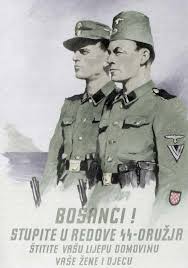
The fez has had it's fair share of dark days, too. A black fez was the adopted head wear of the Italian Bersaglieri units during the fascist regime in Italy in the 1930's and 40's. Some Nazi units also adopted a red fez, but decorated with the "death's head" symbols used by the SS. The red Nazi fez was most often associated with the archeological wing of the 3rd Reich, who were in search of ancient artifacts that would prove German supremacy. Recently, the black fez has been adopted by Muslim radicals, including Mu'ammar Gaddafi in Libya, where the hat is known as the "checheya." Even with all these rough connotations, the fez is still most often encountered in fun settings, or on the heads of hotel clerks and porters in Middle Eastern tourist cities.

How did the fez come to be seen as the hat of relaxation? Well, that's actually pretty simple. During the occupation of the near and far east by the British, around the Victorian era, it became popular for well to do gentlemen to retire in the evening for a period of refreshment and gamesmanship. This usually involved the donning of the fez and a smoking jacket, part of the local culture picked up by the British aristocracy. The practice soon became popular among the lower classes as well, and eventually made it's way back to ol' Blighty where the tradition took hold. This practice was soon lampooned in cartoons and magazines of the day as well, bringing even more attention to it.

So, how did the fez jump the pond and become such a part of Masonic and fraternal culture? In 1870, a group of Masons were meeting at the Knickerbocker Cottage, in NYC, for lunch once a week. Regular attendees to this group soon began thinking that they should form their own organization, by making the lunch club a more formalized Masonic group. Two of the members took this idea to heart, namely Dr. Walter Fleming and William Florence, an a doctor. These two began to collaborate on what the new club should be like. Florence, having just returned from an acting tour in Europe, described a show he had recently seen where the actors portrayed a middle eastern royal court, which would then engage the audience by making them members of a "secret" club for the evening. The show was getting rave reviews and Florence relished in the idea. Fleming was also intrigued, so, he took the ideas supplied by Florence and molded them into what has become the Ancient Arabic Order of the Nobles of the Mystic Shrine, or Shriners.


The first Shrine chartered was Mecca Temple, in NYC, with Fleming as it's first President, known as a "Potentate." Early in it's formation, the Shrine adopted the wearing of a the red fez as a unique distinction for it's members, a practice which has become synonymous with the organization to the present day. As with any good idea, imitators soon followed, and it wasn't long until fraternal groups all over the country began using fezzes as a symbol of their fellowship. DeMolay was one of these adopters as well, with many parade and drill groups in DeMolay taking on the fez as their hat of choice. Fezzes are certainly not new innovations in the fraternal world, that's for sure!

So, there you have it - the curious history of the eccentric little hat, known as a fez!

Frat! ~ "Dad" Seth Anthony

Wednesday, December 8, 2010

They're here!


The Limited Edition PA DeMolay Fezzes arrived at my office today. Whoa! Do they look awesome!

The final order was as follows: 8 Blue Fezzes and 1 Purple Fez. Purple you say? Yes, purple! Part of the perks of being the Grand Fez is getting a purple one – so, that one is reserved for Fezzy himself!

Of the 8 blues, 7 were claimed by individuals, and the 8th will go on display in Patton Hall.

At some point in the future I intend to make a “PA DeMolay Bearers of the Fez” page for the PA DeMolay website, where I will place a picture of each of the owners in their fez for posterity. 

Thanks to everyone who participated in this program!

Frat! ~ "Dad" Seth Anthony

Monday, December 6, 2010

Signs of Growth

What a weekend for Pennsylvania DeMolay! Grand Master's Class 2010 was held this past weekend at Patton Campus, in Elizabethtown, and it was quite possibly one of the best events of the whole year! Bro. Alex Rauschenberger, State Senior Councilor, and his team, did a fabulous job of planning and executing this event.

The best part? Thanks to the 13 new members in the class, PA DeMolay has now grown in 2010! This means that we have more members than we started the year with! This is the second straight year of growth, which goes to show that you are out there selling the DeMolay program and asking your friends to join. Keep up the good work!

On Friday, before the class, "Dad" Dave Berry, our Executive Secretary, pointed out something very significant to me. This is the first year in many that we have had major changes in the Outstanding Chapter Competition. In Pennsylvania, this competition is broken down into three categories: small, medium, and large divisions. This way we can compare "apples to apples" when looking at our Chapters. 2010 saw the shift of four Chapters from the "small" Chapter division to the "medium" Chapter division. On the same thought, no Chapters slipped backwards in the divisions. Those facts show that not only is PA DeMolay growing, but it also shows our Chapters are too! It's a great feeling knowing that our Chapters are experiencing a richer and more interesting DeMolay program on the local level while helping our jurisdiction grow!

Congratulations to you PA DeMolay! You've done some outstanding work!

Frat! ~ "Dad" Seth Anthony

Friday, December 3, 2010

Trivia with Fezzy: Week 7!

Each Friday I am posting a PA DeMolay Blog related trivia question. Each active DeMolay from Pennsylania (excluding Elected State Officers) who correctly posts their answer in the comments section of this blog will be placed in a drawing to receive 5 points for the Take Control! program and receive a special "Fezzy" gamer tag over on the points page! All you have to do is leave your answer in the comments section. On Monday morning I will randomly select one of the correct answers and award the person with the points. Answer every week and rack up some major points - it's that easy! Remember, the answer to the question can found right here on the PA DeMolay blog in a previous post. We've had 132 posts so far, but I guarantee you that it's on the blog somewhere!

I've been negligent about posting questions, so this week is a special five question round! I will chose a different winner for each question if I'm able!

1. What are the three types (meaning different titles) given to members of the Supreme Council of DeMolay International?


2. What are the three main types of lapels found on mens suits?


3. How much money per unit does the Masonic Blood Club offer to a 501(c) charity for each unit collected? How can DeMolay benefit from this?


4. What is the main charity of the Tall Cedars of Lebanon?


5. Where is Convention 2011 going to be held?

Get answering!

Frat!-"Dad" Seth "Fezzy" Anthony

Thursday, December 2, 2010

Westmoreland Road Warriors

Today's article is brought to you by "Dad" Bruce Neubauer of Westmoreland Chapter, located in Greensburg, PA.

What do you think about when you hear visitations points? I bet you think about taking a trip to a DeMolay Chapter and getting points for the competition. I don't want to say that this is not important, because it is. When the guys from Westmoreland visit another Chapter we take the visitation form to to get signed and send it in for points. Our members enjoy traveling and want to win the competition. But, how about we think about visitation points in a different way. Instead of points, think about visitation ideas and thoughts.

What I've have learned about visitation points is that it is not just a number on a piece of paper; it is indeed a powerful tool. Our members  at Westmoreland Chapter first started traveling to get "the Judge" (the PA DeMolay travelling gavel.) That might be how we started, but it has grown from there. Now, don’t get the wrong idea. Westmoreland is still dedicated to bringing "the Judge" back to Greensburg. But now we look forward to travelling for other reasons too. As Advisors, we do not talk about the competition. We just say there is an activity coming up and the DeMolays ask at a meeting "...who wants to go?" Fortunately we have the advisors that like to travel and enjoy the events just as much as the young men.

I would like to take my story back to Key Man 2010 for a minute. Key Man proves the idea that in DeMolay, the members and advisors you don't know are just friends that haven't not met yet. We came home from Key Man and a couple months later one of our members said that he wanted to go to an installation at a Chapter that a friend he met at Key Man belonged too. Without asking where the Chapter was, the answer from the transperation advisor was "Sure!" Then we found out the Chapter was North East Chapter in Philadelphia. But you know what, the answer was still "yes."  Our member went on the visit out of friendship and brotherhood. He didn't want to make this visit for points - he wanted to make it personal.

This past Sunday one of our Appointed State Officers from Westmoreland Chapter was asked to help at an installation of officers at Friendship-Bray Chapter. We had three other members ask to come along. At the last minute another office needed filled and one of the guys coming along agreed to fill in. Again this does not sound like a cut-throat points based competition. It sounds like brotherhood. It also sounded like a chance to capture one of the most illusive pictures in PA DeMolay history - a shot of "Dad" Rick Freedman, a long time Philly area resident, wearing what can only be described as a Pittsburgh Steelers collar. Great work!

As I was riding home from Friendship-Bray I started thinking how important it is to support other Chapters. I feel that one of the most important days in a Master Councilor's term is the Installation. It would be great if you could get all the nearby Chapters to show support.

The advisors of Westmoreland DeMolay are very proud of our young men. They have certainly caught the spirit and gotten the meaning of DeMolay.

If you let Westmoreland know when you are having an installation, We might just be there.

"Dad" Bruce Neubauer is the Chairman of Westmoreland Chapter. He has attended the last two Key Man Conferences and is quickly becoming a familiar face around PA DeMolay. He is actively involved in the Tall Cedars of Lebanon, where he serves as a District Deputy Supreme Tall Cedar and was elected to the Board of Directors. He also does a great job explaining how important the funny hat they wearreally is (its called a "pyramid" by the way) . This editor certainly appreciated it and will wear his proudly.