
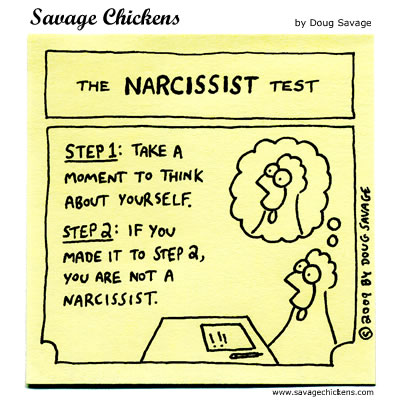
This article was sent to me by "Dad" Peter Brusoe, of Nation's Capital DeMolay. It has some good, thought provoking questions in it. Check it out!
 March 10, 2011
The Modesty Manifesto
By DAVID BROOKS
We’re an overconfident species. Ninety-four percent of college professors believe they have above-average teaching skills. A survey of high school students found that 70 percent of them have above-average leadership skills and only 2 percent are below average.
Men tend to be especially blessed with self-esteem. Men are the victims of unintentional drowning more than twice as often as women. That’s because men have tremendous faith in their own swimming ability, especially after they’ve been drinking.
Americans are similarly endowed with self-esteem. When pollsters ask people around the world to rate themselves on a variety of traits, they find that people in Serbia, Chile, Israel and the United States generally supply the most positive views of themselves. People in South Korea, Switzerland, Japan, Taiwan and Morocco are on the humble side of the rankings.
Yet even from this high base, there is some evidence to suggest that Americans have taken self-approval up a notch over the past few decades. Start with the anecdotal evidence. It would have been unthinkable for a baseball player to celebrate himself in the batter’s box after a home-run swing. Now it’s not unusual. A few decades ago, pop singers didn’t compose anthems to their own prowess; now those songs dominate the charts.
American students no longer perform particularly well in global math tests. But Americans are among the world leaders when it comes to thinking that we are really good at math.
Students in the Middle East, Africa and the United States have the greatest faith in their math skills. Students in Japan, South Korea, Hong Kong and Taiwan have much less self-confidence, though they actually do better on the tests.
In a variety of books and articles, Jean M. Twenge of San Diego State University and W. Keith Campbell of the University of Georgia have collected data suggesting that American self-confidence has risen of late. College students today are much more likely to agree with statements such as “I am easy to like” than college students 30 years ago. In the 1950s, 12 percent of high school seniors said they were a “very important person.” By the ’90s, 80 percent said they believed that they were.
In short, there’s abundant evidence to suggest that we have shifted a bit from a culture that emphasized self-effacement — I’m no better than anybody else, but nobody is better than me — to a culture that emphasizes self-expansion.
Writers like Twenge point out that young people are bathed in messages telling them how special they are. Often these messages are untethered to evidence of actual merit. Over the past few decades, for example, the number of hours college students spend studying has steadily declined. Meanwhile, the average G.P.A. has steadily risen.
Some argue that today’s child-rearing and educational techniques have produced praise addicts. Roni Caryn Rabin of The Times recently reported on some research that found that college students would rather receive a compliment than eat their favorite food or have sex.
If Americans do, indeed, have a different and larger conception of the self than they did a few decades ago, I wonder if this is connected to some of the social and political problems we have observed over the past few years.
I wonder if the rise of consumption and debt is in part influenced by people’s desire to adorn their lives with the things they feel befit their station. I wonder if the rise in partisanship is influenced in part by a narcissistic sense that, “I know how the country should be run and anybody who disagrees with me is just in the way.”

Most pervasively, I wonder if there is a link between a possible magnification of self and a declining saliency of the virtues associated with citizenship.
Citizenship, after all, is built on an awareness that we are not all that special but are, instead, enmeshed in a common enterprise. Our lives are given meaning by the service we supply to the nation. I wonder if Americans are unwilling to support the sacrifices that will be required to avert fiscal catastrophe in part because they are less conscious of themselves as components of a national project.
Perhaps the enlargement of the self has also attenuated the links between the generations. Every generation has an incentive to push costs of current spending onto future generations. But no generation has done it as freely as this one. Maybe people in the past had a visceral sense of themselves as a small piece of a larger chain across the centuries. As a result, it felt viscerally wrong to privilege the current generation over the future ones, in a way it no longer does.
It’s possible, in other words, that some of the current political problems are influenced by fundamental shifts in culture, involving things as fundamental as how we appraise ourselves. Addressing them would require a more comprehensive shift in values.
The Modesty Manifesto
By DAVID BROOKS
We’re an overconfident species. Ninety-four percent of college professors believe they have above-average teaching skills. A survey of high school students found that 70 percent of them have above-average leadership skills and only 2 percent are below average.
Men tend to be especially blessed with self-esteem. Men are the victims of unintentional drowning more than twice as often as women. That’s because men have tremendous faith in their own swimming ability, especially after they’ve been drinking.
Americans are similarly endowed with self-esteem. When pollsters ask people around the world to rate themselves on a variety of traits, they find that people in Serbia, Chile, Israel and the United States generally supply the most positive views of themselves. People in South Korea, Switzerland, Japan, Taiwan and Morocco are on the humble side of the rankings.
Yet even from this high base, there is some evidence to suggest that Americans have taken self-approval up a notch over the past few decades. Start with the anecdotal evidence. It would have been unthinkable for a baseball player to celebrate himself in the batter’s box after a home-run swing. Now it’s not unusual. A few decades ago, pop singers didn’t compose anthems to their own prowess; now those songs dominate the charts.
American students no longer perform particularly well in global math tests. But Americans are among the world leaders when it comes to thinking that we are really good at math.
Students in the Middle East, Africa and the United States have the greatest faith in their math skills. Students in Japan, South Korea, Hong Kong and Taiwan have much less self-confidence, though they actually do better on the tests.
In a variety of books and articles, Jean M. Twenge of San Diego State University and W. Keith Campbell of the University of Georgia have collected data suggesting that American self-confidence has risen of late. College students today are much more likely to agree with statements such as “I am easy to like” than college students 30 years ago. In the 1950s, 12 percent of high school seniors said they were a “very important person.” By the ’90s, 80 percent said they believed that they were.
In short, there’s abundant evidence to suggest that we have shifted a bit from a culture that emphasized self-effacement — I’m no better than anybody else, but nobody is better than me — to a culture that emphasizes self-expansion.
Writers like Twenge point out that young people are bathed in messages telling them how special they are. Often these messages are untethered to evidence of actual merit. Over the past few decades, for example, the number of hours college students spend studying has steadily declined. Meanwhile, the average G.P.A. has steadily risen.
Some argue that today’s child-rearing and educational techniques have produced praise addicts. Roni Caryn Rabin of The Times recently reported on some research that found that college students would rather receive a compliment than eat their favorite food or have sex.
If Americans do, indeed, have a different and larger conception of the self than they did a few decades ago, I wonder if this is connected to some of the social and political problems we have observed over the past few years.
I wonder if the rise of consumption and debt is in part influenced by people’s desire to adorn their lives with the things they feel befit their station. I wonder if the rise in partisanship is influenced in part by a narcissistic sense that, “I know how the country should be run and anybody who disagrees with me is just in the way.”

Most pervasively, I wonder if there is a link between a possible magnification of self and a declining saliency of the virtues associated with citizenship.
Citizenship, after all, is built on an awareness that we are not all that special but are, instead, enmeshed in a common enterprise. Our lives are given meaning by the service we supply to the nation. I wonder if Americans are unwilling to support the sacrifices that will be required to avert fiscal catastrophe in part because they are less conscious of themselves as components of a national project.
Perhaps the enlargement of the self has also attenuated the links between the generations. Every generation has an incentive to push costs of current spending onto future generations. But no generation has done it as freely as this one. Maybe people in the past had a visceral sense of themselves as a small piece of a larger chain across the centuries. As a result, it felt viscerally wrong to privilege the current generation over the future ones, in a way it no longer does.
It’s possible, in other words, that some of the current political problems are influenced by fundamental shifts in culture, involving things as fundamental as how we appraise ourselves. Addressing them would require a more comprehensive shift in values.


